
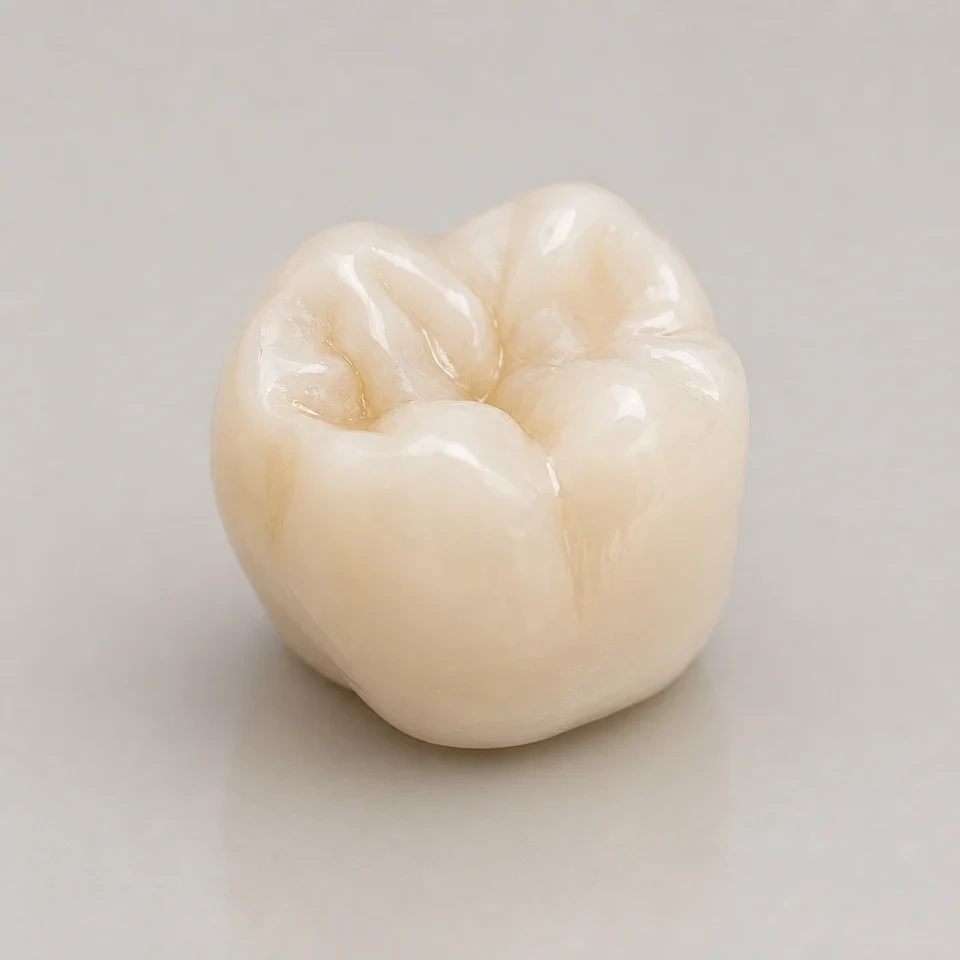
Zirconia Crowns
Full-contour and layered zirconia crowns and bridges milled from approved digital designs, with case-by-case review of margins, contacts, occlusion and material requirements.
Details at a Glance
| Restoration type | Fixed restoration — single unit, splinted units and bridges |
|---|---|
| Material options |
|
| Design options |
|
| Commonly considered for |
|
| Records to supply |
|
| Quality focus |
|
| Turnaround | Production time depends on restoration type, case complexity and confirmed requirements. Indicative timelines are confirmed before the first case and re-confirmed per order. |
What Zirconia Crowns Are
A zirconia crown dental lab China workflow gives clinics and laboratories a practical route to full-contour, layered and multilayer zirconia crowns and bridges produced from approved digital designs. These restorations are milled from presintered zirconia blanks, sintered to final density, and then stained, glazed or polished according to the prescription, with case-by-case review of margins, contacts, occlusion and material requirements. Zirconia is valued for its high flexural strength and shade stability, which makes it a frequent choice for posterior crowns and bridge frameworks where functional load is a primary concern. The same workflow can also support anterior units when preparation thickness and shade planning allow a convincing esthetic result.
Who It Suits
A zirconia crown dental lab China option suits practices and laboratories that already work from digital scans or conventional impressions and want a predictable metal-free restoration across single units and multi-unit spans. The material is appropriate for clinicians who prioritize strength and long-term shade stability while still wanting esthetic characterization for visible zones, and for technicians who prefer to receive a milled framework or full-contour unit to finish locally.
- Dental clinics restoring posterior and anterior teeth with a metal-free plan
- Dental laboratories needing milled frameworks or full-contour units to finish in-house
- Distributors and agents consolidating fixed-restoration cases for several clinics
- DSOs and dental groups standardizing a consistent zirconia protocol across sites
Indications Commonly Considered
- Single posterior crowns where occlusal load and wear resistance are the priority
- Single anterior crowns when thickness and shade planning allow an esthetic result
- Short-span and long-span bridges, subject to span and connector review
- Full-arch fixed provisional and definitive frameworks, subject to case review
- Implant-supported single crowns and bridges when the connection is confirmed
- Cases where the prescription specifies monolithic, layered or multilayer zirconia
Material and Design Options
- Monolithic (full-contour) zirconia for strength-focused posterior cases
- Layered zirconia with cutback reserved for veneering ceramic where esthetics matter
- Multilayer (gradient) zirconia with a translucency transition across the unit
- Zirconia bridge frameworks planned around connector dimension and pontic form
What the Case Needs
- A completed laboratory prescription stating restoration type and material preference
- Impressions or digital scans with clearly readable margin lines
- Bite records or confirmed occlusal scheme instructions
- Shade specification and reference photos where shade matching is required
- Tooth numbers, abutment details and any pontic or connector notes for bridges
- Cementation notes or bonding protocol expectations where relevant
Digital Workflow Requirements
- Open STL or scanner-native files with distinguishable margin lines
- Opposing arch and bite records included in the export for articulation
- Implant case files to include system, connection and scan body information
- Continuous margin capture so the design seat can be validated before milling
- Adequate occlusal clearance notes to support the planned material thickness
Compatibility to Confirm
- Implant system, platform and connection type for implant-supported units
- Shade system and reference standard used by the prescribing clinician
- Local cementation or bonding plan so retention and margin are planned accordingly
- Pontic and connector expectations for any bridge span submitted
Quality Checkpoints
- Prescription details reviewed against the design before milling begins
- Margin integrity and seating checked on dies or printed models
- Proximal contacts and occlusion checked against the provided records
- Material thickness verified against the selected zirconia indication
- Connector dimensions and pontic form confirmed for bridge cases
- Surface condition, shade and characterization checked before packing
Turnaround Variables
Production time for zirconia cases depends on several variables rather than a single fixed schedule. Restoration type, the number of units, bridge span and connector planning, the selected material and finish, the clarity of the submitted records, and the time needed for shade review or clarification all influence the timeline. Indicative timelines are confirmed before the first case and re-confirmed per order once the prescription and files have been reviewed, so the actual schedule reflects the confirmed scope of work.
Common Questions
Can zirconia be used in the anterior esthetic zone?
Yes, where preparation thickness and shade planning support it; layered or multilayer zirconia is often discussed for improved characterization. The final result still depends on the supplied shade references and the surrounding dentition.
How are bridge spans and connectors handled?
Bridge spans and connector dimensions are confirmed case by case before production, because span length and functional load determine whether a zirconia framework is appropriate. Pontic design and insertion path are reviewed as part of the same check.
What shade information should be supplied?
Final shade, stump shade where relevant, calibrated photos with a shade tab and neighbouring-tooth references help produce a closer match. Without reference photos or physical tabs, shade matching remains approximate.
Are implant zirconia crowns supported?
Implant cases are supported when the system, connection and scan body details are provided with the files. The abutment or custom abutment plan should be confirmed before the crown design is finalized.
Next Step
Send a representative zirconia crown case with the preparation scan, opposing arch, bite and shade references for material and workflow review. You can also review the digital workflow and send a test case to confirm the process before committing to volume work.
Related products
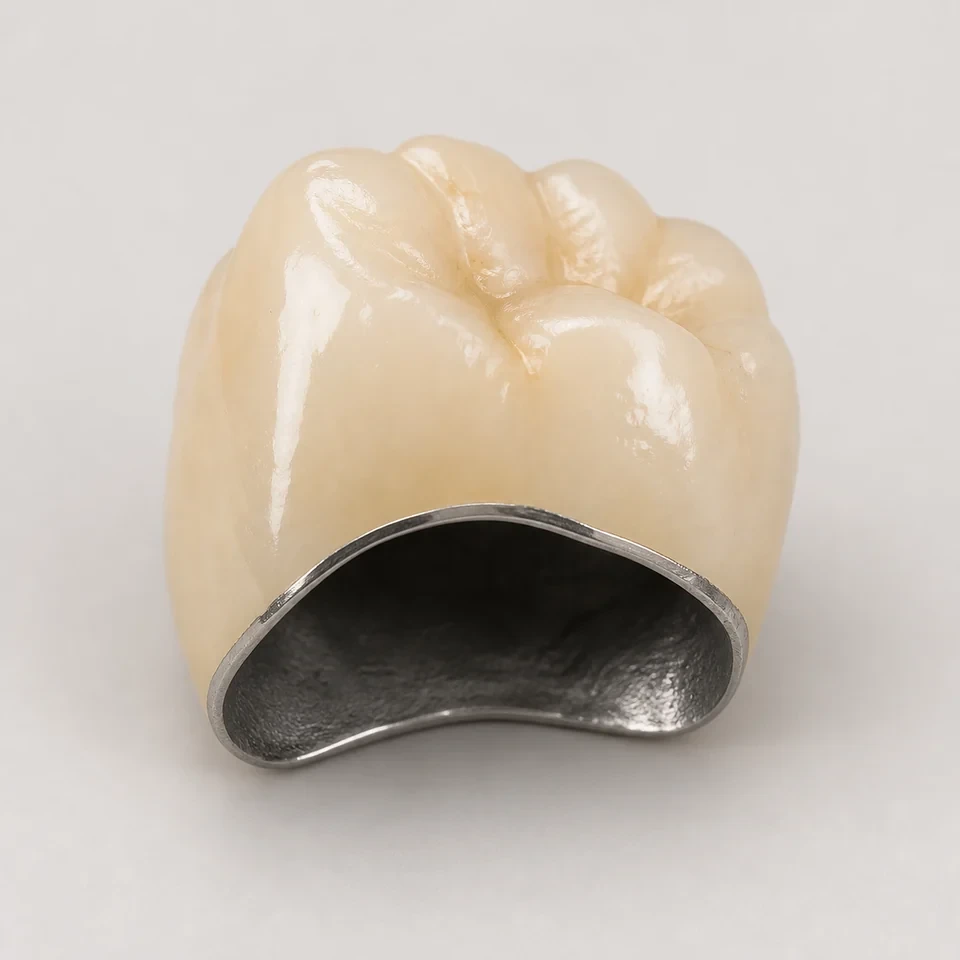
PFM Crowns
Porcelain fused to metal restorations combining a metal coping or framework with a compatible ceramic system, coordinated through framework fabrication, layering and firing.
View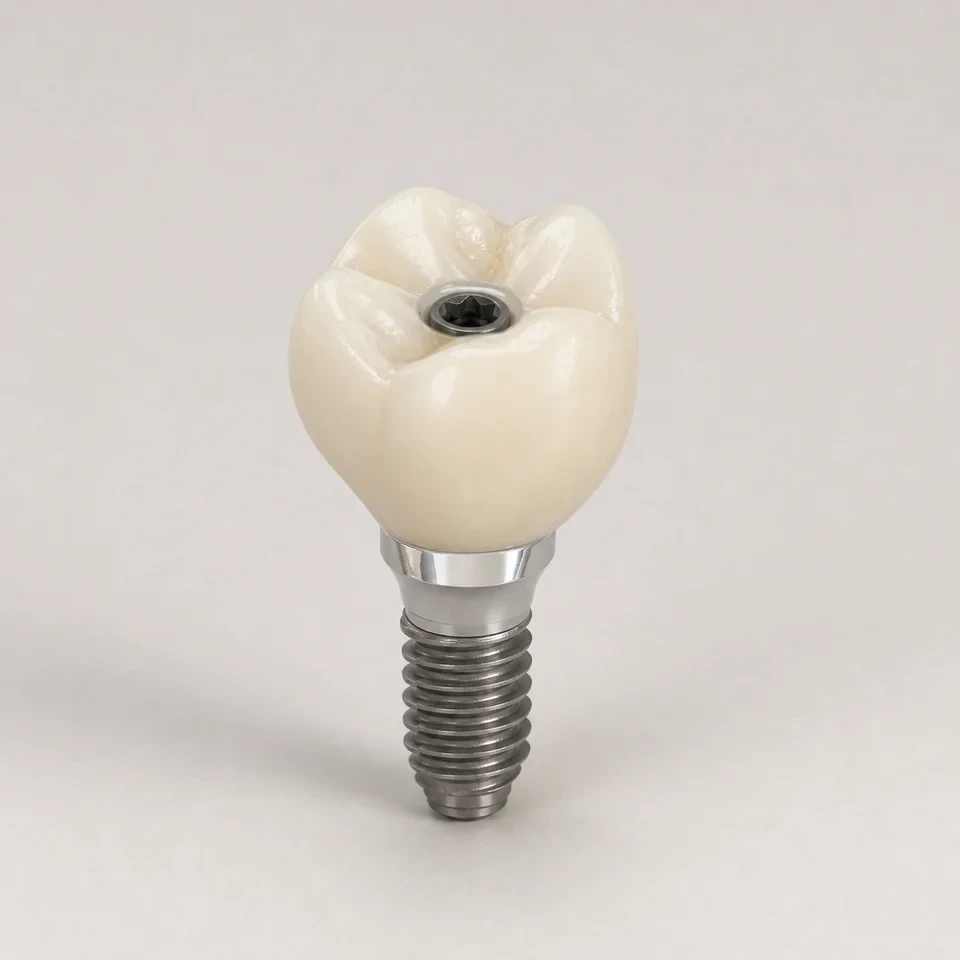
Implant Crowns
Implant-supported crowns designed from scan body data with system and connection verification, retention options reviewed case by case.
View