Cobalt Chrome Partials
Cobalt chrome frameworks and partial dentures designed from survey records, with fit and occlusion checked before finishing.
Details at a Glance
| Restoration type | Removable — metal framework partial denture |
|---|---|
| Material options |
|
| Design options |
|
| Commonly considered for |
|
| Records to supply |
|
| Quality focus |
|
| Turnaround | Framework cases are scheduled by design confirmation and record completeness. |
What Cobalt Chrome Partials Are
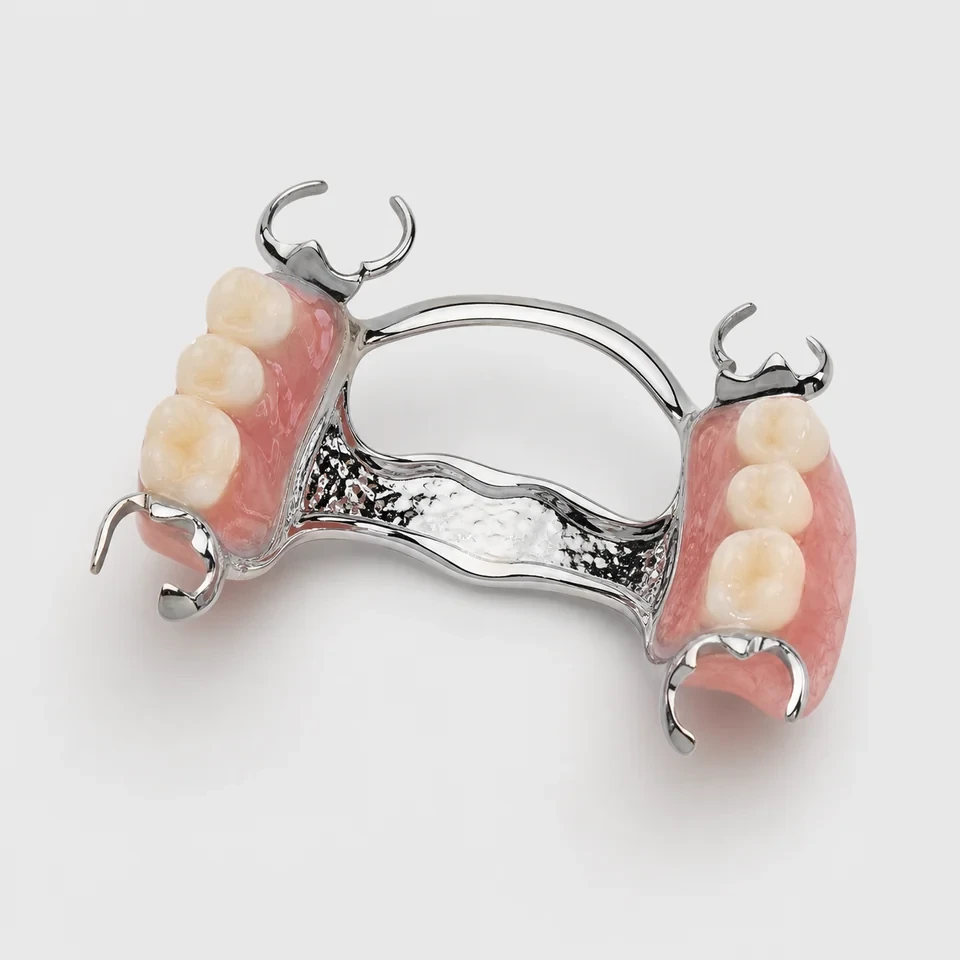
A cobalt chrome partial denture lab produces removable partial dentures built around a cast or milled cobalt chrome framework that supports replacement teeth and engages the remaining dentition for retention. KC Dental Lab supports these workflows by reviewing survey records, planning clasp and rest positions, coordinating tooth setup and checking framework fit before finishing. The cobalt chrome structure provides a thin, rigid base that can be more comfortable than an all-acrylic partial where strength and a low profile matter. Framework design typically begins with a survey of the diagnostic cast to identify the most favorable path of insertion, after which clasp arms, occlusal rests and the major connector are positioned to balance retention, support and stability. Each framework is planned against the prescribed path of insertion so clasps, rests and major connectors seat consistently at delivery, and the resulting appliance is designed to sit passively without placing unwanted forces on the abutment teeth.
Who It Suits
This service suits dental clinics, laboratories, distributors and DSOs that need framework design and production coordination rather than a finished appliance supplied without planning documentation. It works well for practices that prefer to keep clinical decisions in-house while outsourcing the technical fabrication steps to a cobalt chrome partial denture lab. The arrangement is also practical for laboratories that experience uneven demand and want to place metal partial work without investing in dedicated casting or milling capacity. By sharing the survey prescription and records, the requesting party retains control of the clinical plan while the fabrication steps are handled to specification.
- Clinics sending survey impressions with a written framework prescription
- Laboratories needing extra casting or milling capacity for metal partials
- DSOs standardizing partial designs across multiple locations
- Distributors coordinating repeat framework specifications for clinics
Indications Commonly Considered
- Kennedy class partial cases where a rigid framework is appropriate
- Long-span or strength-critical partials needing metal support
- Cases with a few remaining teeth that require clasp retention
- Combination cases planned with fixed and removable components
- Patients where a thin, low-profile base is preferred over acrylic
- Replacement frameworks copied from a satisfactory existing partial
Material and Design Options
- Cobalt chrome alloy framework, cast or CAD/CAM milled
- Clasp, rest and major connector design per prescription
- Acrylic or composite denture tooth setup
- Finishing and polishing options for the acrylic base
- Framework-only supply or a completed partial denture
What the Case Needs
- Impressions or scans of the arch to be restored
- Survey and design preferences, including the path of insertion
- Tooth numbers to be replaced and any existing teeth to clasp
- Shade and mold selection for the replacement teeth
- An existing framework or partial as a reference if available
- Try-in stage expectations and final shipping instructions
Digital Workflow Requirements
- STL, PLY or OBJ files when digital records are used
- Opposing arch and a bite registration for setup review
- Clear tissue and undercut definition around abutment teeth
- Survey line and path of insertion noted in the prescription
- Any CAD design file or drawing the clinician wishes to supply
Compatibility to Confirm
- Whether a cast or milled framework is preferred
- Scanner and file format compatibility for digital cases
- Clasp design compatibility with remaining tooth contours
- Acrylic shade and tooth mold availability
Quality Checkpoints
- Framework fit and complete seating on the master model
- Clasp engagement and rest seating on prepared surfaces
- Occlusal contact and base adaptation to the tissue
- Major connector coverage and border extension
- Finish, polish and cleanliness before packaging
- Prescription consistency against the submitted design
Turnaround Variables
Framework turnaround depends on several variables that are reviewed per case rather than fixed in advance. Design complexity, whether a try-in stage is requested, record completeness and the choice between cast and milled production all influence scheduling. Additional setup or adjustment stages, and any rework of survey data, can extend the timeline. Cast frameworks and milled frameworks follow different internal production routes, so the selected method also affects when the case is ready. KC Dental Lab schedules each framework case after design confirmation and once the submitted records are complete enough for production, and discusses the expected sequence with the requesting party before the work begins.
Common Questions
Can a framework be supplied without teeth?
Yes. Framework-only supply is available, with the acrylic tooth setup completed by the requesting laboratory or clinic if preferred.
Do you mill or cast the cobalt chrome framework?
Both options are supported. The choice depends on the prescribed design, available records and production planning for the case.
What if the survey data is incomplete?
Incomplete survey data can lead to fit or clasp issues. KC Dental Lab reviews records first and may request additional information before production.
Can an existing partial be used as a reference?
Yes. A satisfactory existing framework or partial can be supplied as a reference to guide reproduction or modification.
Next Step
Send your arch impressions or scans, survey preferences and tooth replacement plan so KC Dental Lab can review the workflow. You can send a case or start a trial case to confirm fit and finish on a live case. See the cobalt chrome partial denture lab page for options and the removable restorations overview for related products.