
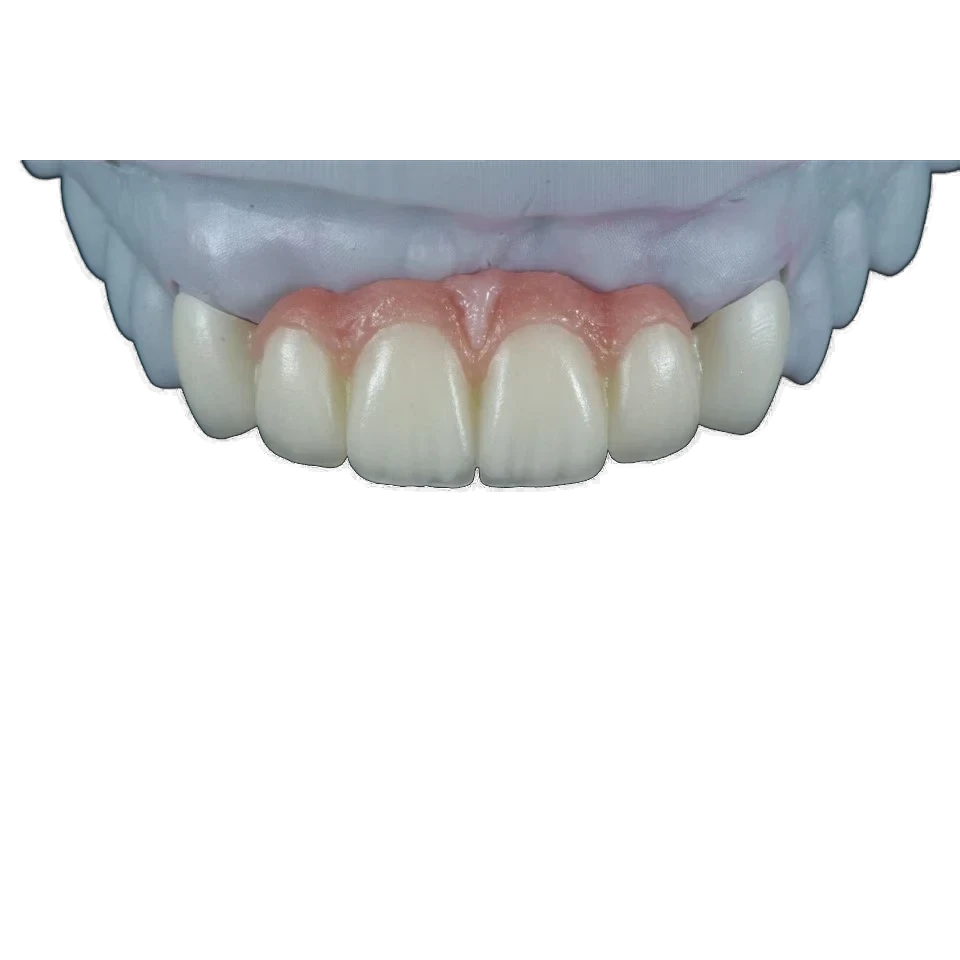
Implant Bridges
Multi-unit bridges supported by implants, designed around the connection, the emergence profile and the gingival form of the site.
Details at a Glance
| Restoration type | Implant restoration — implant-supported bridge |
|---|---|
| Material options |
|
| Design options |
|
| Commonly considered for |
|
| Records to supply |
|
| Quality focus |
|
| Turnaround | Implant bridge cases are scheduled by span, verification steps and the retention design confirmed. |
What Implant Bridges Are
An implant bridge dental lab produces a multi-unit fixed restoration supported by two or more implants rather than by natural teeth, built around the implant connections and the gingival form of the site. The bridge can be screw-retained or cement-retained, and where the case calls for it the design can include pink gingiva characterisation. KC Dental Lab supports these cases by verifying the implant positions and confirming the retention design before production, because an implant bridge depends on accurate transfer across every interface.
An implant bridge sits between a single implant crown and a full-arch restoration. It shares the single-unit case’s need for a verified interface, and it shares the full-arch case’s need to distribute load across several supports. That is why the review stage confirms the implant positions, the connector dimensions and the pontic form together, so the restoration functions as one unit rather than as separate pieces.
Who It Suits
This service suits clinicians and laboratories planning fixed multi-unit implant restorations where a bridge is appropriate, and where the implant positions can be verified from a scan or model. It fits implant-focused practices and groups standardizing an implant bridge protocol across locations.
- Clinics restoring multi-unit spans on two or more implants
- Laboratories producing a milled framework to finish locally
- Practices needing a fixed alternative to a removable prosthesis
- Dental groups standardizing an implant bridge protocol
Indications Commonly Considered
Implant bridges are usually considered where a fixed, multi-unit implant restoration is planned. Typical requests include the following.
- Multi-unit spans supported by two or more implants
- Cases where a fixed implant restoration is preferred
- Sites needing gingival form around the pontic area
- Replacement of an existing implant bridge
- Situations where a screw-retained or cement-retained span is being planned
- Sequences moving from a provisional to a definitive implant bridge
Material and Design Options
The framework design and the retention type are the main decisions, because the bridge distributes load across several interfaces. The surface can be monolithic or layered, and the pontic and gingival form are planned around the site. Where a case calls for a particular retention type or gingival design, it is confirmed before the framework is milled.
- Monolithic zirconia over implant interfaces
- Layered zirconia where the prescription calls for a ceramic surface
- Screw-retained or cement-retained design per case
- Pontic and connector form confirmed for the span
- Pink gingiva characterisation where indicated
What the Case Needs
A complete submission shortens the review stage and reduces the chance of a remake. The following records help the laboratory plan the span and the interfaces.
- Implant positions, systems and connection details
- A verified scan with scan bodies or an approved model
- Bite records and vertical dimension information
- Shade and gingiva references where matching is required
- Notes on retention type and gingival design
- Any existing bridge the case must match
Digital Workflow Requirements
- STL, PLY or OBJ scan with scan bodies captured in position
- Opposing arch and a bite registration for articulation
- Implant analogue or model for position verification
- Notes on retention type and gingival design
- Shade and gingiva references where characterisation is planned
Compatibility to Confirm
- Implant systems and connections, which determine the interface components
- Retention type, which affects screw access and the framework design
- Pontic site condition and the gingival form the restoration must follow
- Vertical dimension and occlusal scheme so the bridge restores the intended function
Quality Checkpoints
Every implant bridge passes a defined set of checkpoints before dispatch, because the restoration seats across several interfaces and must function as one unit. The reviews below confirm that the bridge seats correctly, the connectors and retention suit the span and the shade matches the supplied references, and any point that cannot be confirmed is raised with the requesting party rather than assumed.
- Framework fit checked across all implant interfaces
- Screw access and retention verified
- Connector dimensions and pontic form checked against the plan
- Occlusion and vertical dimension checked against the provided records
- Shade and gingiva characterisation reviewed against references
- Finish and polish reviewed before packaging
Turnaround Variables
Implant bridge scheduling depends on span, the verification steps required and the retention design confirmed rather than a fixed interval. Because the bridge seats across several interfaces, the number of implants, the pontic design and any gingiva characterisation all affect bench time. Shade and photograph review and the completeness of the implant records also shape the confirmed timing.
Where a case requires a provisional stage or an additional verification step, that time is reflected in the confirmed timing. A short implant bridge usually moves through fewer stages than a longer span with gingiva characterisation, and the schedule is confirmed once the prescription, files and design details are complete. KC Dental Lab discusses the expected sequence with the requesting party before production begins.
Common Questions
How is an implant bridge different from a tooth-supported bridge?
An implant bridge is supported by implants rather than by prepared natural teeth, so the design is built around the implant connections and the components that fit them. That makes interface verification part of the review rather than only the tooth preparation.
Should the bridge be screw-retained or cement-retained?
The retention type is confirmed case by case and depends on the implant positions, the restorative space and the planned maintenance. Screw access and channel position are reviewed as part of the same decision.
Can gingiva be characterised?
Yes, where the prescription calls for it and the references are supplied, pink gingiva characterisation can be included. The result depends on the supplied references.
What records are required?
Implant positions, systems and connections, a verified scan or model, bite and vertical dimension records, and shade and gingiva references are the essentials for an implant bridge case.
Next Step
Send your implant bridge case with the implant records, verified scan and shade references so the span and retention design can be reviewed before production. You can compare the single implant crown or the All-on-4 and All-on-X service, read the implant dental lab guide for workflow context, or send a case to start a review.
Related products
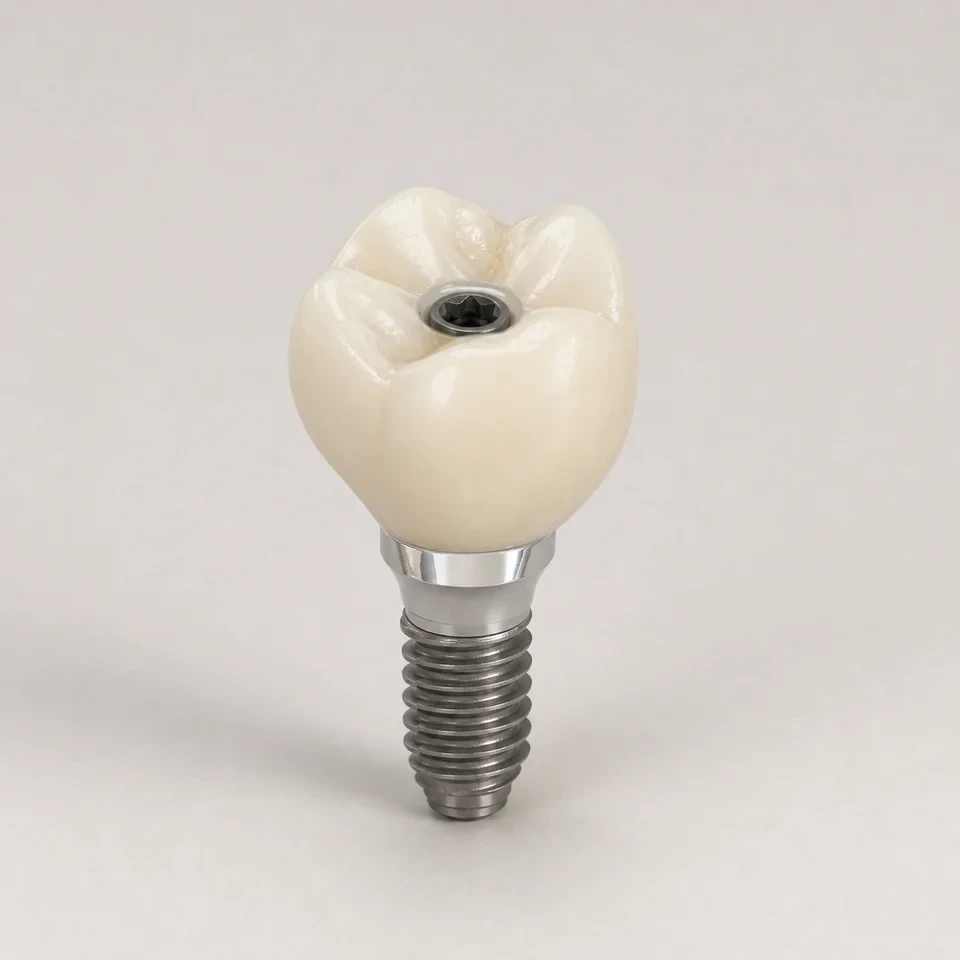
Implant Crowns
Implant-supported crowns designed from scan body data with system and connection verification, retention options reviewed case by case.
View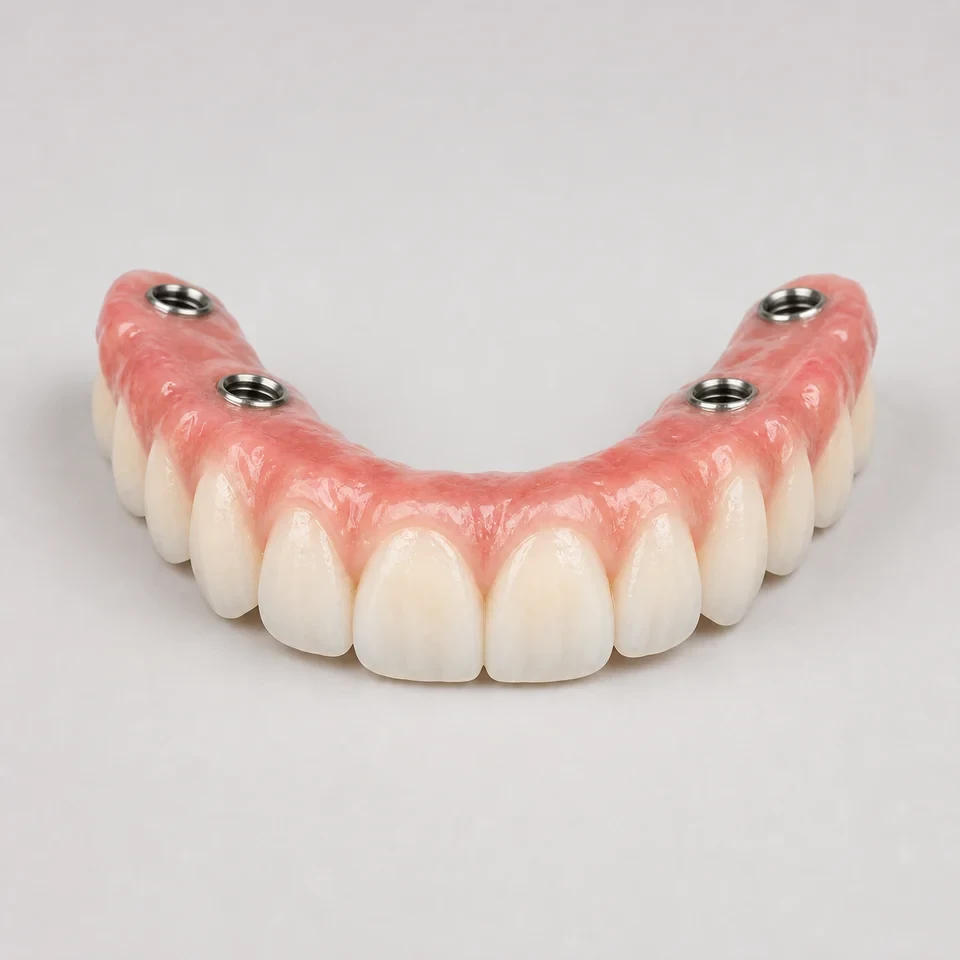
All-on-4 and All-on-X
Full-arch implant restorations coordinated with staged design review, using verified implant components and confirmed case records.
View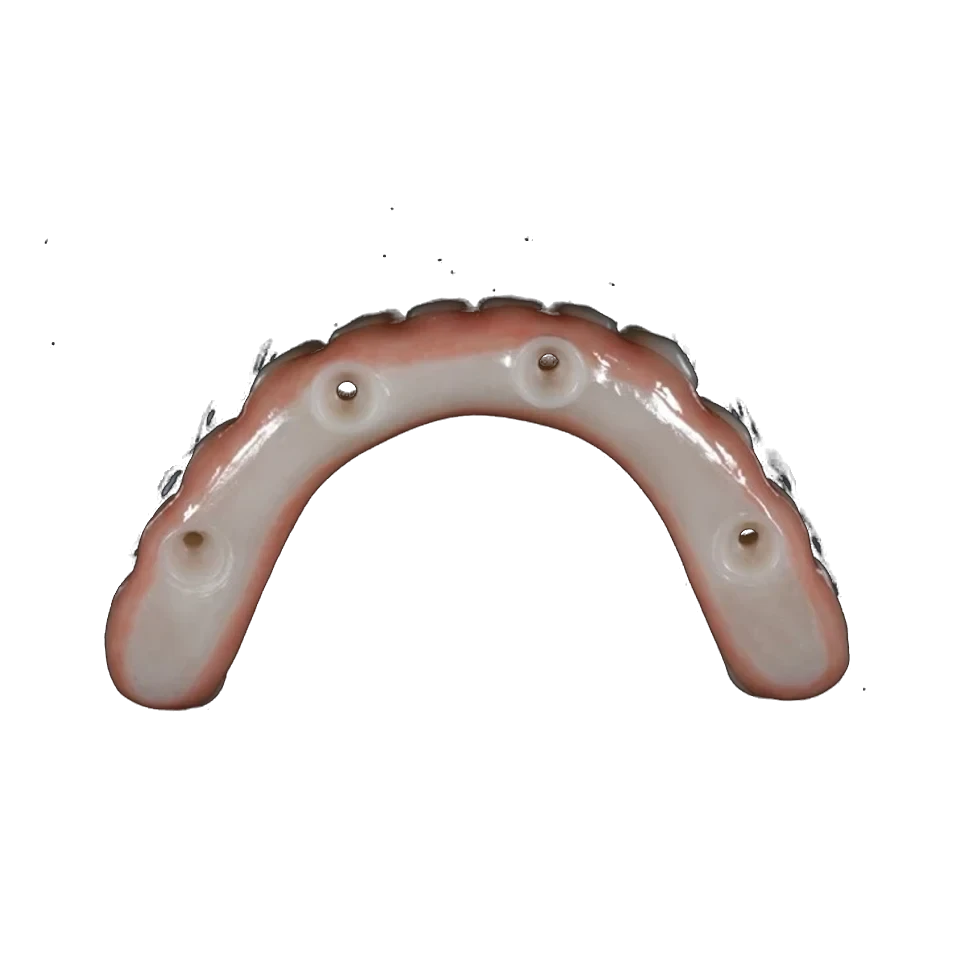
Full-Arch Zirconia Bridge
Implant-supported full-arch zirconia bridges produced from an approved design, with framework, connector and gingival form reviewed per case.
View