
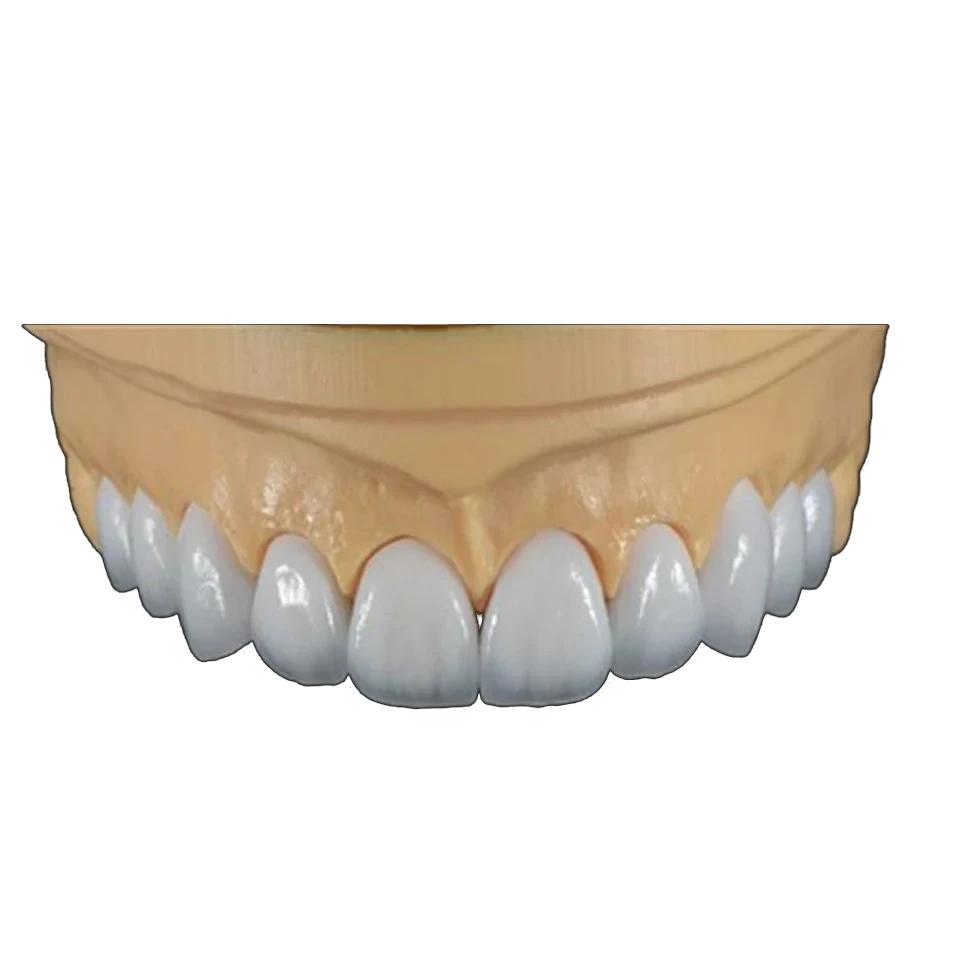
E.max Veneers
Lithium disilicate veneers produced for anterior esthetic cases, with preparation, translucency and shade reviewed before characterization.
Details at a Glance
| Restoration type | Fixed restoration — lithium disilicate veneer |
|---|---|
| Material options |
|
| Design options |
|
| Commonly considered for |
|
| Records to supply |
|
| Quality focus |
|
| Turnaround | E.max veneer cases are scheduled by unit count, fabrication route and confirmation of shade details. |
What E.max Veneers Are
An E.max veneer lab produces thin anterior restorations from lithium disilicate, a glass-ceramic that combines dependable strength with a translucency close to natural enamel. E.max is supplied as a pressed ingot or a milled block, and a veneer made from it is usually finished with cut-back layering or surface staining so the incisal edge carries the detail the case needs. KC Dental Lab supports these workflows by reviewing the preparation, margin design and shade references before the fabrication route is confirmed. Because the material can be pressed or milled, the laboratory selects the route that suits the thickness and detail the clinician has planned.
The material is often chosen where a veneer needs to resist occlusal loading while still reading as a natural anterior tooth. That balance is why E.max veneers are common in the esthetic zone, and it also means the review stage sets the expectation for thickness, translucency and finish. Each unit is checked against the preparation and the supplied references so the delivered veneer matches the planned shade and shape rather than an approximate tone. Where a record is incomplete, the laboratory reports the gap before production instead of guessing.
Who It Suits
This E.max veneer lab China service suits clinicians, laboratories, distributors and dental groups planning anterior esthetic improvements where strength and appearance both matter. It is appropriate where the treating clinician sets the shade, shape and preparation and the laboratory delivers the finished veneers to that prescription. The model also helps practices that want to compare a pressed glass-ceramic against a hand-layered porcelain for the same case. Laboratory partners can place esthetic veneer work externally while keeping patient contact and clinical decisions in house, and a single-unit trial case shows how the laboratory reads shade and translucency before a larger batch is committed.
- Clinics planning anterior shade, shape or symmetry corrections
- Laboratories finishing pressed or milled lithium disilicate veneers
- Distributors and agents supporting esthetic-focused practices
- Dental groups standardising a veneer protocol across locations
Indications Commonly Considered
E.max veneers are usually considered where a thin anterior restoration must combine appearance with a measure of loading resistance. Typical requests include the following.
- Anterior esthetic-zone veneers for shade and shape correction
- Single-tooth or multi-unit veneer cases
- Cases needing translucency without sacrificing strength
- Corrections of discolored, worn or chipped anterior teeth
- Cases where cut-back layering would improve incisal detail
- Cases where a mock-up or trial would help plan the result
Material and Design Options
Lithium disilicate can be pressed or milled, so the design options begin with the fabrication route that suits the intended thickness and detail. From there, cut-back layering and surface staining refine the incisal translucency so the veneer reads like the adjacent enamel rather than a uniform block. The options below describe the choices the clinician can specify before production, and where a case needs a particular level of translucency or a stronger loading resistance, it is confirmed on the prescription first.
- Pressed lithium disilicate for consistent density and fit
- Milled lithium disilicate where a digital route suits the case
- Cut-back and layering to add incisal translucency and character
- Staining and glaze for subtle surface effects
- Translucency and opacity selection matched to the neighbouring teeth
What the Case Needs
A complete submission shortens the review stage and reduces the risk of a remake. The following details help the laboratory plan the fabrication accurately.
- Tooth numbers and target shade recorded on the prescription
- Preparation records or scans showing the margin clearly
- Facial and smile reference photographs where available
- Stump shade and cement shade information where relevant
- Notes on existing restorations and the current occlusion
- Any trial, mock-up or characterization request stated before production
Digital Workflow Requirements
- STL, PLY or OBJ scan with clear, continuous margin capture
- Facial scan or photographs when shape planning is needed
- Opposing arch and a bite registration for the occlusal relationship
- Adequate reduction notes to support the intended veneer thickness
- Surface or characterization references where requested
Compatibility to Confirm
- Substrate shade, because very dark teeth may need additional planning
- Cement shade, which influences the final translucency of the veneer
- Whether a pressed or milled route is intended for the case
- Existing restorations and occlusion that affect the veneer design
Quality Checkpoints
Every E.max veneer passes a defined set of checkpoints before dispatch, because a lithium disilicate restoration depends on both fit and appearance. The reviews below confirm that the veneer seats correctly, respects the reduction, and matches the supplied shade references, and any point that cannot be confirmed is raised with the requesting party rather than assumed.
- Marginal and internal fit checked against the preparation
- Thickness and reduction respect confirmed to avoid over-reduction
- Translucency and shade matched to the supplied references
- Incisal characterization and surface texture assessed
- Glaze finish and polish reviewed for a natural surface
- Prescription consistency checked before packaging
Turnaround Variables
E.max veneer scheduling depends on unit count, the fabrication route and confirmation of shade details rather than a fixed interval. Pressed and milled cases each follow different internal steps, and any cut-back layering or incisal characterization adds bench time. Shade and photograph review, any mock-up stage, and the completeness of the preparation records all shape the confirmed schedule.
Where a multi-unit case combines several shades across the arch, additional review time is reflected in the confirmed timing. A single-unit trial case usually moves through fewer stages than a full-arch design, and the schedule is confirmed once the prescription, files and shade information are complete. KC Dental Lab discusses the expected sequence with the requesting party before production begins, and reports any record issue that could affect the result.
Common Questions
Is E.max suitable for anterior veneers?
Lithium disilicate is commonly used for anterior veneers where a balance of strength and translucency is wanted. The clinician confirms suitability based on the preparation, the loading and the shade target.
How is translucency controlled?
Translucency is managed through the ingot or block selection and through cut-back layering at the incisal edge. Supplying shade and photograph references helps the laboratory match the neighbouring teeth.
Can E.max veneers be used on dark teeth?
Very dark substrate shades may need additional planning, because a thin restoration can allow the underlying color to show through. Stump shade and cement shade notes help manage the outcome.
Are digital scans supported?
Open digital scans in STL, PLY or OBJ are supported when margins are continuous and the shade references are supplied. Scanner compatibility is confirmed before the first case.
Next Step
Send your E.max veneer case files with preparation records, facial photographs and target shade so the fabrication route can be reviewed before production. You can compare the hand-layered feldspathic option or the general dental veneers service, review the E.max crown workflow for related cases, or send a case to start a review.
Related products
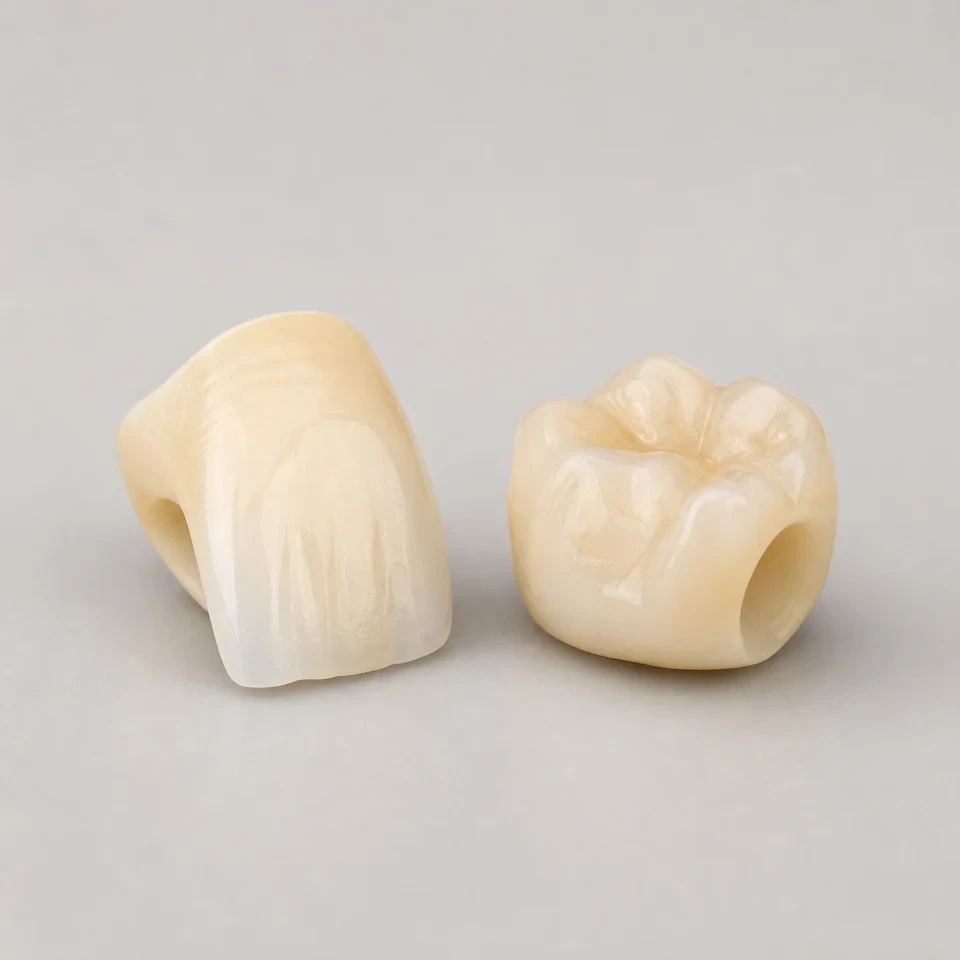
E.max Crowns
Lithium disilicate crowns, veneers and inlays produced for esthetic cases, with material selection and shade confirmed before production.
View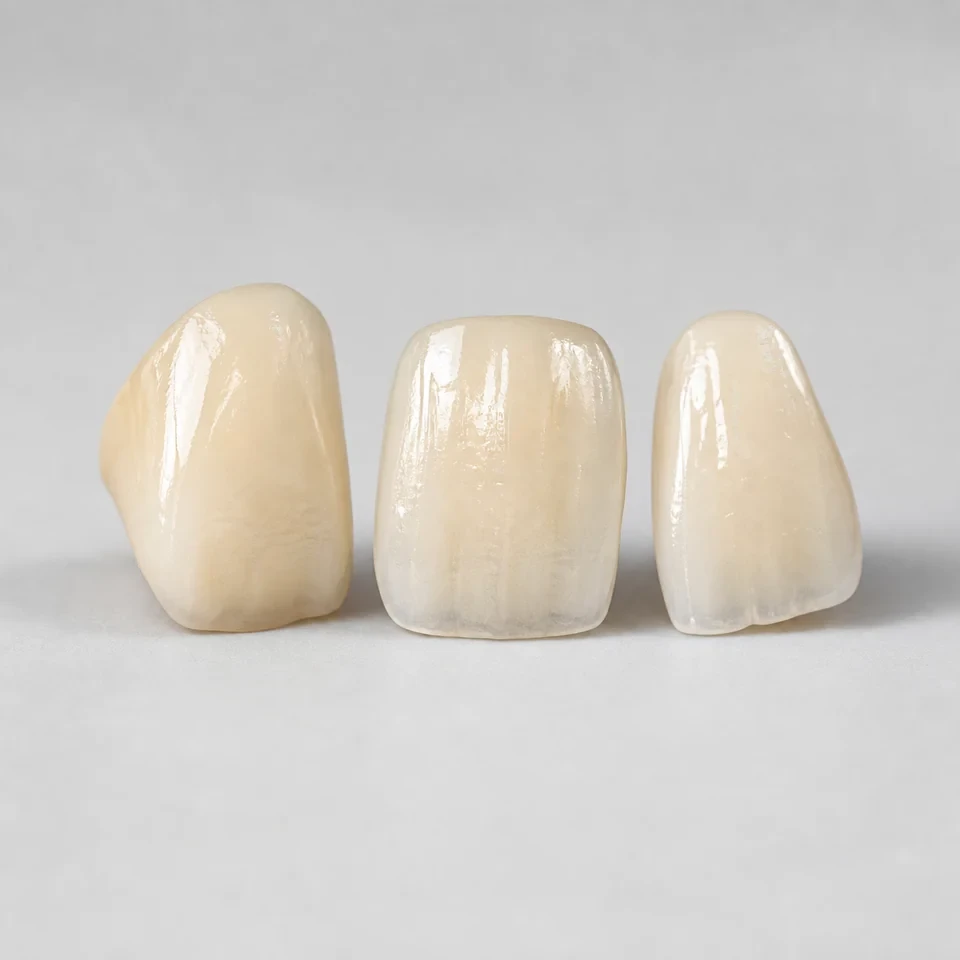
Dental Veneers
Lithium disilicate veneers produced for esthetic-zone cases, with preparation, shade and translucency reviewed before production.
View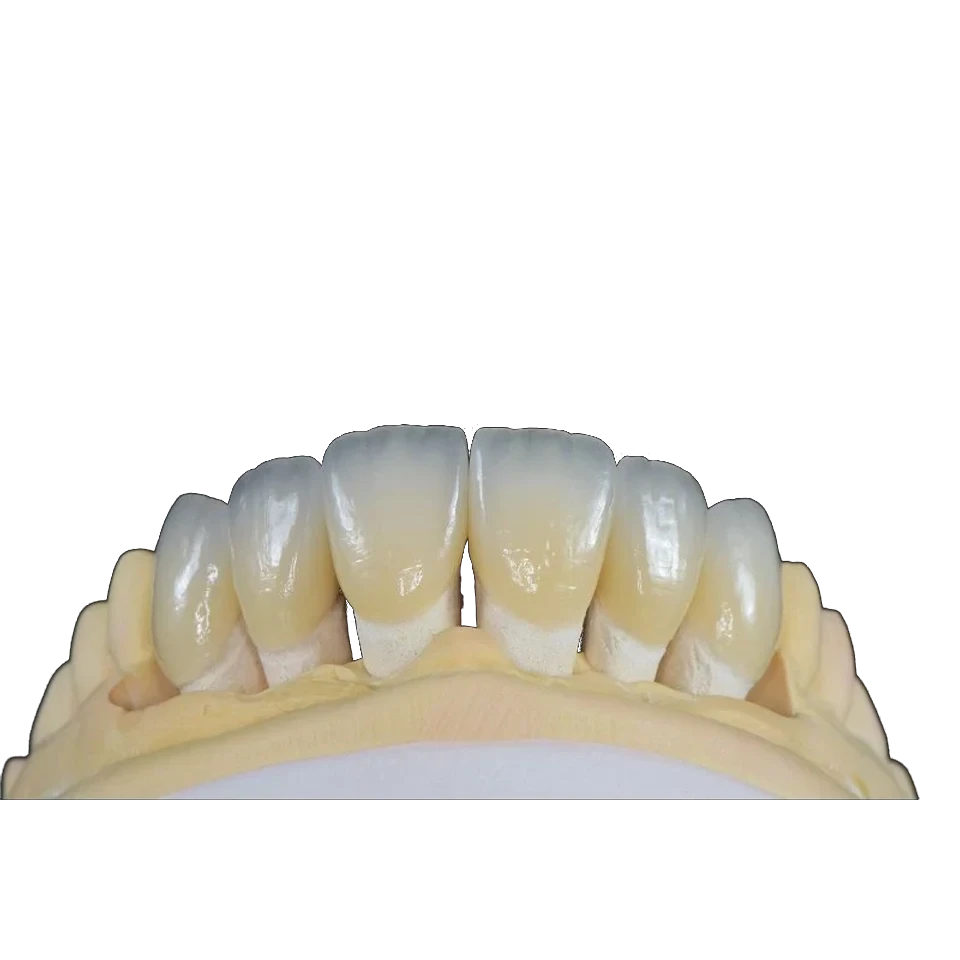
Feldspathic Veneers
Hand-layered feldspathic porcelain veneers produced for esthetic-zone cases, with layering, translucency and surface character planned before production.
View