
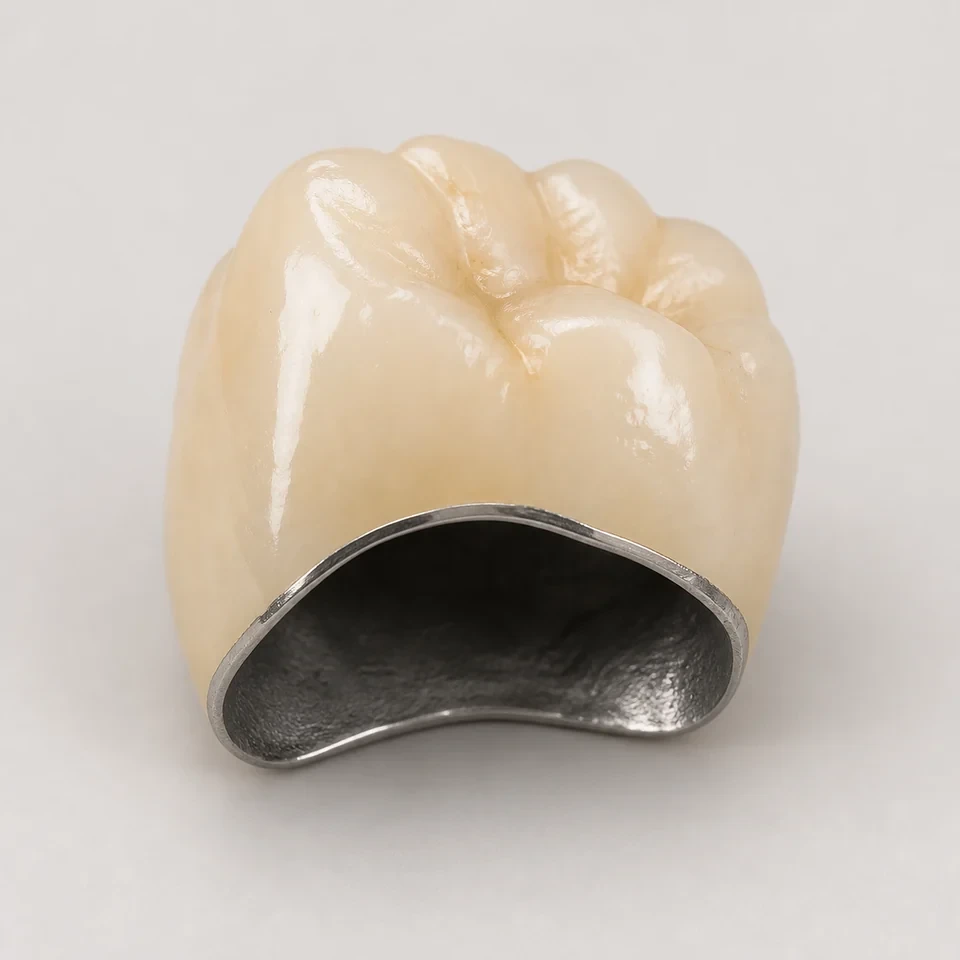
PFM Crowns
Porcelain fused to metal restorations combining a metal coping or framework with a compatible ceramic system, coordinated through framework fabrication, layering and firing.
Details at a Glance
| Restoration type | Fixed restoration — crowns and bridges |
|---|---|
| Material options |
|
| Design options |
|
| Commonly considered for |
|
| Records to supply |
|
| Quality focus |
|
| Turnaround | Production time depends on restoration type, case complexity and confirmed requirements. |
What PFM Crowns Are
A PFM crown dental lab workflow produces porcelain fused to metal restorations that combine a cast or milled metal coping or framework with a compatible ceramic system. The metal substructure provides support and retention, while layered porcelain builds the anatomic form, shade and surface character needed for the restoration. PFM remains a familiar metal-ceramic option for clinics and laboratories that specify it for strength, established handling and predictable cost, and it is coordinated through framework fabrication, opaque application, porcelain layering, firing and final fit and shade checks. The laboratory confirms the alloy and margin design with the prescribing clinician before the framework is fabricated, because these choices shape every later step.
Who It Suits
A PFM crown dental lab engagement suits practices and laboratories that prescribe a conventional metal-ceramic restoration and want a well-understood workflow with clear cost expectations. The material is appropriate where the prescription calls for a metal-supported crown or bridge, including cases where a porcelain margin or a metal occlusal surface is specified. It also suits technicians who want a framework delivered for local porcelain application or a finished unit returned ready to fit.
- Dental clinics restoring posterior teeth where a metal-ceramic crown is prescribed
- Dental laboratories needing frameworks or finished PFM units to complete locally
- Distributors and agents serving markets that still specify metal-ceramic work
- DSOs and dental groups maintaining a standard PFM protocol for selected cases
Indications Commonly Considered
- Single crowns where a metal-ceramic restoration is prescribed
- Bridges where a metal framework supports the pontics and connectors
- Posterior cases where established metal-ceramic workflows are preferred
- Cases where predictable cost and familiar handling are prioritized
- Units with a specified full porcelain margin where prescribed
- Restorations with occlusal metal or full ceramic occlusion as designed
Material and Design Options
- Metal coping or framework with a compatible ceramic system
- Alloy selected per prescription, with composition confirmed before production
- Full porcelain margin where the prescription specifies it
- Occlusal metal or full ceramic occlusion according to the design
What the Case Needs
- A prescription with alloy and shade specification
- Impressions or digital scans with clear, readable margins
- Bite records for occlusal relationship and articulation
- Tooth numbers, margin type and restoration design details
- Bridge span, pontic style and connector requirements where applicable
- Any notes on porcelain margin or occlusal surface preference
Digital Workflow Requirements
- Open STL or scanner-native files with distinguishable margin lines
- Opposing arch and bite records included where articulation is needed
- Continuous margin capture so the framework seat can be validated
- Adequate clearance notes to support coping and porcelain thickness
- Alloy and margin preferences stated so the design matches the prescription
Compatibility to Confirm
- Alloy type and composition, which are confirmed before production
- Margin design, including whether a porcelain margin is prescribed
- Occlusal scheme, including metal or ceramic occlusal surfaces
- Cementation or bonding plan so retention is planned accordingly
Quality Checkpoints
- Coping thickness and support for porcelain reviewed before layering
- Opaque ceramic coverage of the framework verified
- Fit, proximal contacts and occlusion checked against the records
- Shade, contour and surface finish assessed before dispatch
- Porcelain integrity and margin condition confirmed at packing
- Framework passivity and seating verified before porcelain application
Turnaround Variables
Production time for PFM cases depends on restoration type, case complexity and confirmed requirements rather than a fixed schedule. Framework fabrication, the alloy specified, the amount of porcelain layering and firing, shade review and any clarification of the prescription all influence the timeline. The schedule is confirmed once the alloy, shade and design details are complete and reviewed, so the actual timing reflects the confirmed scope of work. Where a bridge is involved, connector planning and the firing cycles for multiple units extend the confirmed schedule.
Common Questions
Is PFM still a relevant choice alongside zirconia and e.max?
Yes, for practices that prescribe it, PFM offers a familiar metal-ceramic workflow with established handling and predictable cost. The choice depends on the prescription, tooth position and the clinician’s preference.
What alloy is used for the framework?
The alloy is specified per prescription, and its composition remains case-specific and is confirmed before production. The laboratory does not assume an alloy without a stated requirement.
Can a PFM crown have a porcelain margin?
A full porcelain margin can be produced where it is prescribed, and the margin design should be stated on the prescription so the framework and porcelain are planned accordingly.
How are shade and porcelain finish handled?
Shade notes and photo references help guide porcelain layering, contour, glaze and final appearance. As with other ceramic work, final shade relies on the information supplied by the clinician.
Next Step
Send your PFM case files with the prescription, alloy preference and shade details so the framework and porcelain workflow can be reviewed. You can also compare materials on the fixed restorations overview or request a price list for metal-ceramic work.
Related products
Zirconia Crowns
Full-contour and layered zirconia crowns and bridges milled from approved digital designs, with case-by-case review of margins, contacts, occlusion and material requirements.
View