
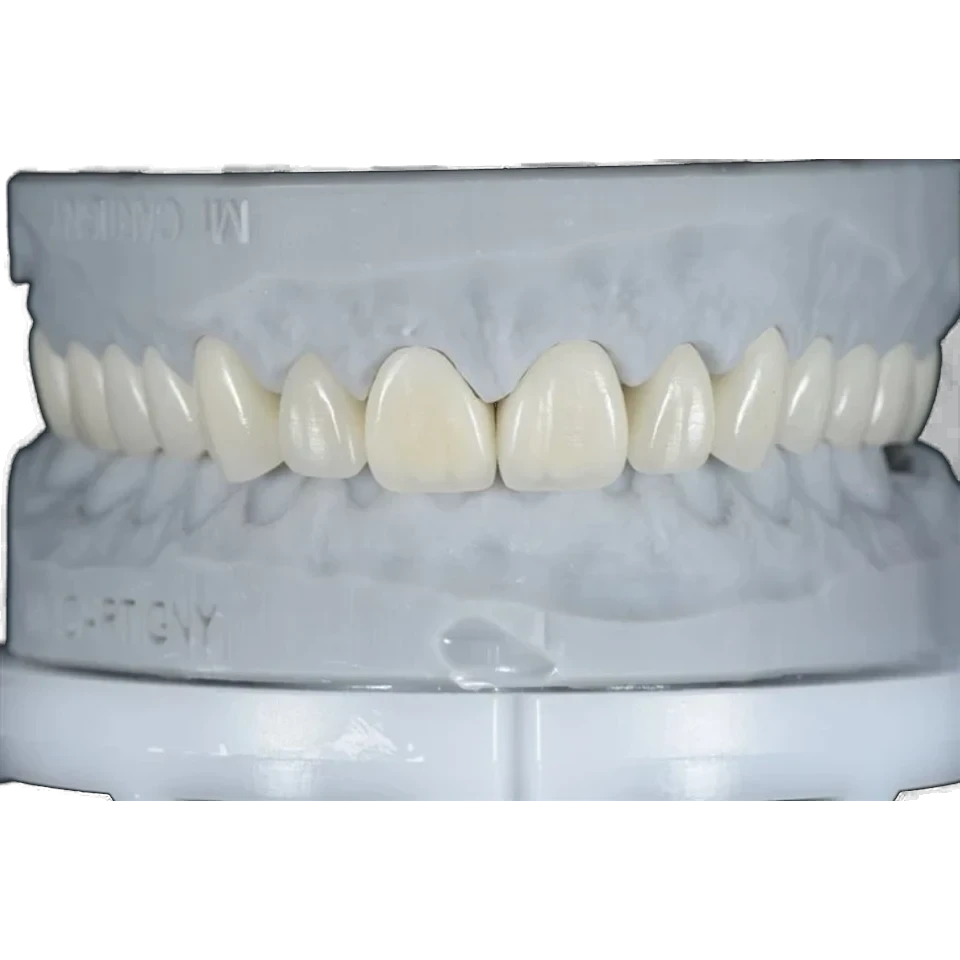
Pressed E.max Crowns
Lithium disilicate crowns formed by the press technique from a wax or digital pattern, then characterised for a lifelike anterior surface.
Details at a Glance
| Restoration type | Fixed restoration — pressed lithium disilicate crown |
|---|---|
| Material options |
|
| Design options |
|
| Commonly considered for |
|
| Records to supply |
|
| Quality focus |
|
| Turnaround | Pressed cases are scheduled by unit count, press and layering stages and confirmation of shade details. |
What Pressed E.max Crowns Are
A pressed E.max crown dental lab forms a lithium disilicate restoration by pressing a heated ceramic ingot into a mould made from a wax or milled pattern, then characterising the surface with layering ceramics where the prescription calls for it. Pressing produces a dense, fine-grained structure and a translucency that suits anterior and visible units, and KC Dental Lab supports these cases by reviewing the reduction, the margin and the shade references before the pattern is finalised.
Pressing sits between fully milled and fully hand-layered work. The pattern defines the shape, the press sets the base structure, and the characterisation stages add incisal effects and surface detail. That combination is why pressed units suit cases where both strength and a lifelike appearance are wanted. The laboratory reports any reduction or margin issue that could limit the result before the pattern is pressed.
Who It Suits
This service suits clinicians planning esthetic single units and short spans where a pressed ceramic surface is preferred, and laboratories that want a pressed unit characterised locally. It also fits practices that need high shade and translucency control, and groups standardizing an esthetic ceramic protocol across locations.
- Clinics restoring anterior teeth where translucency matters
- Laboratories pressing and characterising units in house
- Practices needing close control of incisal and body shade
- Dental groups standardizing an esthetic ceramic protocol
Indications Commonly Considered
Pressed E.max is usually considered where a lifelike surface and good strength are both needed. Typical requests include the following.
- Anterior single units where a lifelike surface is wanted
- Cases needing high shade and translucency control
- Inlays, onlays and veneers produced by pressing
- Short-span units where a pressed surface is preferred
- Restorations where a layered finish is planned over the press
- Replacements of existing ceramic units in a similar shade
Material and Design Options
The pattern and the finishing are the two main levers, because the press defines the base structure and the characterisation defines the surface. The press can start from a wax pattern or a milled pattern, and the finish can be monolithic or layered. Where a case calls for a particular incisal effect or shade, it is confirmed on the prescription before the pattern is pressed.
- Pressed from a wax pattern or a milled pattern
- Monolithic finish for a uniform surface
- Layered finish for incisal and body characterisation
- Surface texture and lobe detail per prescription
- Glaze, stain or polish finishing selected per case
What the Case Needs
A complete submission shortens the review stage and reduces the chance of a remake. The following records help the laboratory plan the press and the characterisation.
- Tooth numbers and target shade recorded on the prescription
- Preparation scans or impressions showing the margin clearly
- Stump shade and photographs where shape planning is required
- Bite records or confirmed occlusal instructions
- Notes on reduction and the finish requested
- Any characterisation request stated before production
Digital Workflow Requirements
- STL, PLY or OBJ scans with clear, continuous margin capture
- Opposing arch and a bite registration for the occlusal relationship
- Notes on reduction and available clearance for the pressed material
- Shade references where characterisation is planned
- Implant information for implant-supported units
Compatibility to Confirm
- Reduction level, which must suit the pressed material and the finish
- Substrate shade, since dark teeth may need additional planning
- Whether a monolithic or layered finish is intended
- Local cementation or bonding plan so retention and margin are planned together
Quality Checkpoints
Every pressed E.max crown passes a defined set of checkpoints before dispatch, because the result depends on both the press and the characterisation. The reviews below confirm that the unit seats correctly, the press is sound and the shade matches the supplied references, and any point that cannot be confirmed is raised with the requesting party rather than assumed.
- Fit and seating checked on the die or printed model
- Press integrity and internal adaptation verified
- Layered shade and translucency matched to the supplied references
- Proximal contacts and occlusion checked against the provided records
- Surface texture, glaze and polish reviewed before packaging
- Prescription consistency checked before the case is dispatched
Turnaround Variables
Pressed case scheduling depends on unit count, the press and layering stages and confirmation of shade details rather than a fixed interval. Because the pattern, the press and the characterisation each take bench time, the number of units and the amount of characterisation both affect the confirmed schedule. Shade and photograph review and the completeness of the preparation records also shape the timing.
Where a multi-unit run combines several shades, additional review time is reflected in the confirmed timing. A single-unit trial usually moves through fewer stages than a multi-unit esthetic run, and the schedule is confirmed once the prescription, files and shade information are complete. KC Dental Lab discusses the expected sequence with the requesting party before production begins.
Common Questions
How is a pressed crown different from a milled crown?
A pressed crown is formed by pressing a ceramic ingot into a mould made from a pattern, while a milled crown is cut from a block. Pressing can give a more uniform translucency and suits characterisation, and the choice depends on the case and the finish.
Can pressed units be characterised?
Yes. Where the prescription calls for it, layering and characterisation ceramics are applied over the press to build incisal effects and surface detail before the final glaze.
Are pressed crowns suitable for posterior teeth?
They can be used where the load and the available reduction suit the material, though posterior units often point to zirconia for greater strength. The occlusal load is reviewed case by case.
What shade information should be provided?
Final shade, stump shade where relevant, and calibrated photographs with a shade tab all help produce a closer match. Without reference photographs or physical tabs, shade matching remains approximate.
Next Step
Send your pressed E.max crown case with the preparation scan, opposing arch, bite record and shade references so the press and characterisation plan can be reviewed before production. You can compare the E.max crown service or the layered zirconia crown, read the E.max crown dental lab guide for material context, or send a case to start a review.
Related products
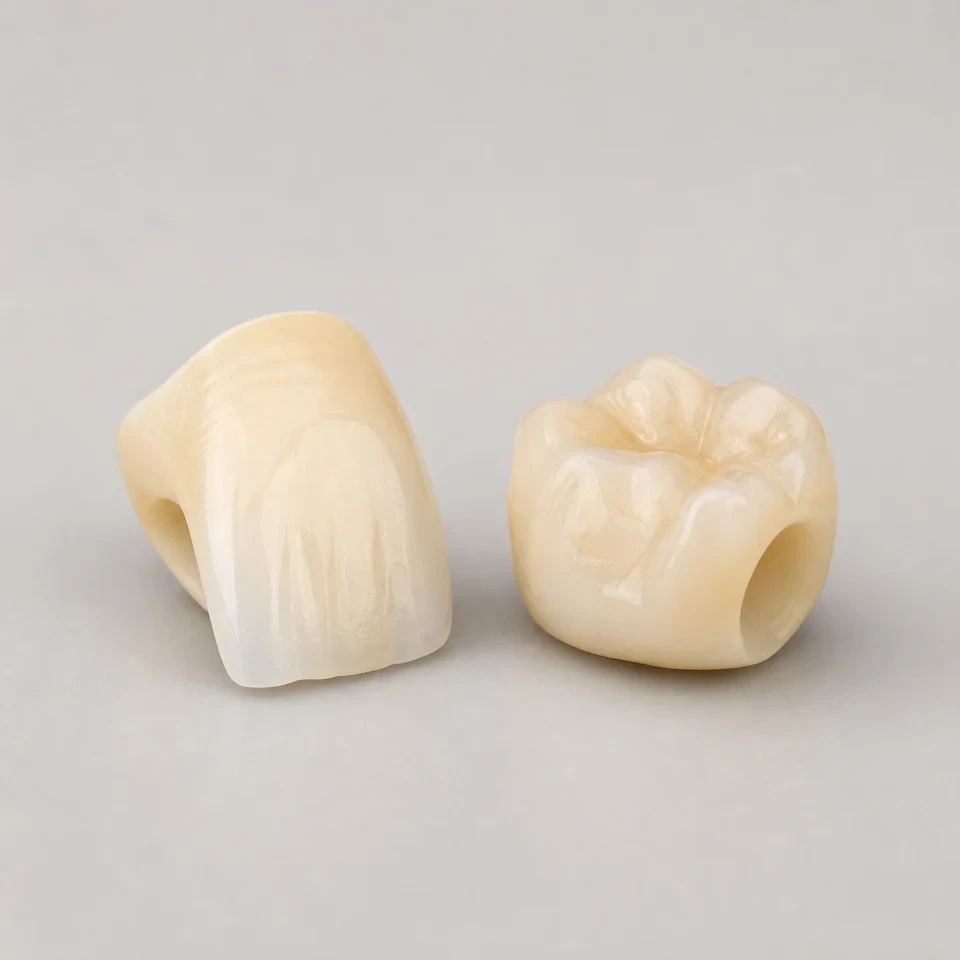
E.max Crowns
Lithium disilicate crowns, veneers and inlays produced for esthetic cases, with material selection and shade confirmed before production.
View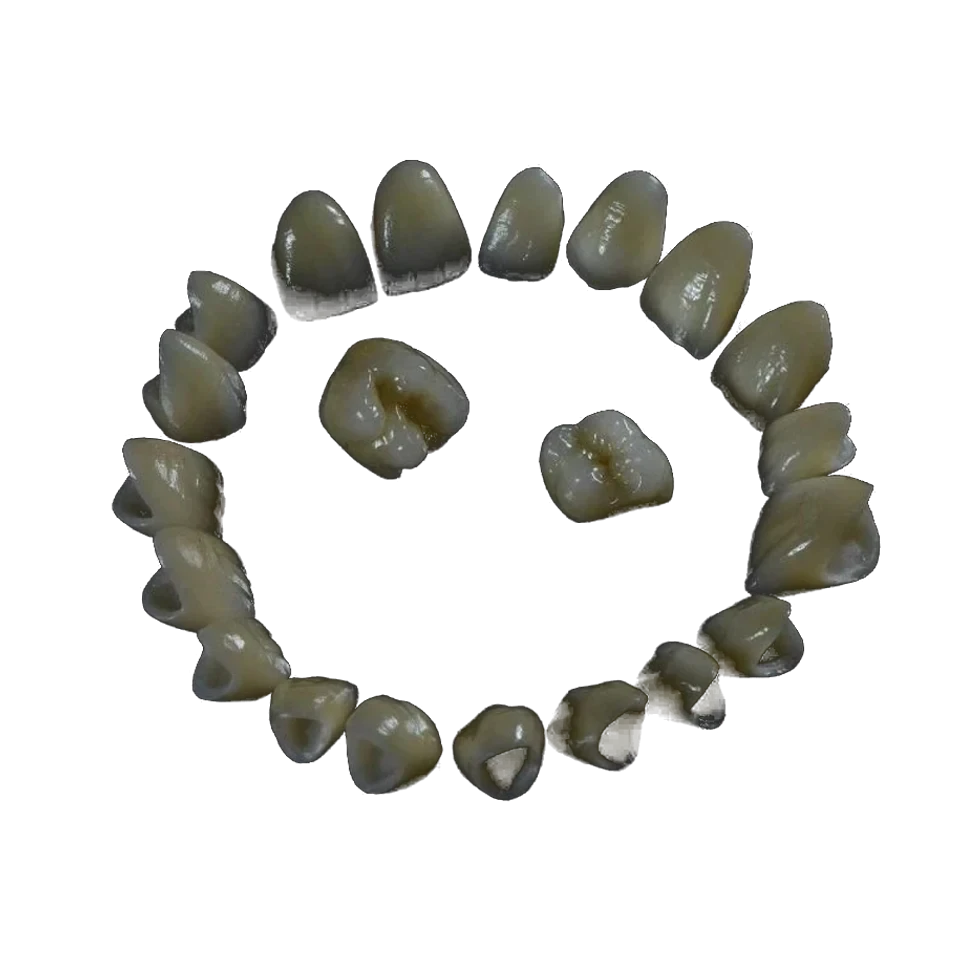
Layered Zirconia Crowns
Zirconia crowns built from a milled cutback framework and veneered with ceramic, for cases that need zirconia strength with a more esthetic surface.
View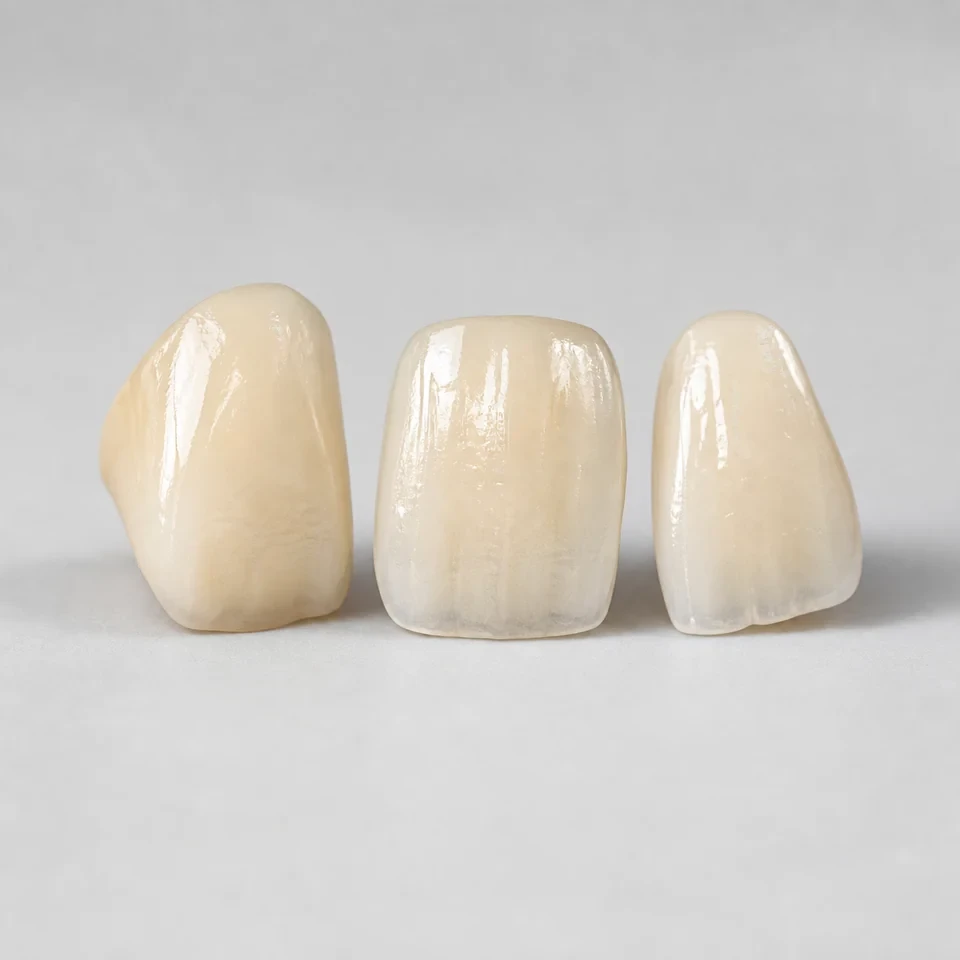
Dental Veneers
Lithium disilicate veneers produced for esthetic-zone cases, with preparation, shade and translucency reviewed before production.
View