
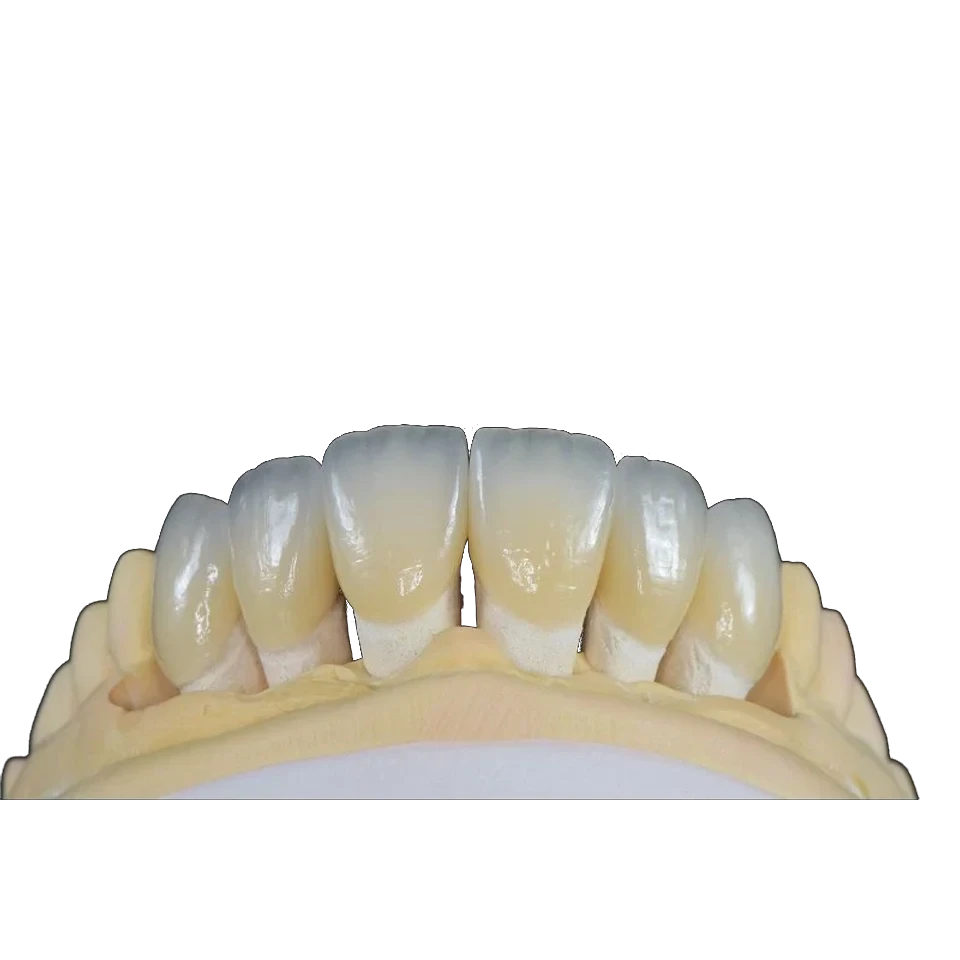
Feldspathic Veneers
Hand-layered feldspathic porcelain veneers produced for esthetic-zone cases, with layering, translucency and surface character planned before production.
Details at a Glance
| Restoration type | Fixed restoration — feldspathic porcelain veneer |
|---|---|
| Material options |
|
| Design options |
|
| Commonly considered for |
|
| Records to supply |
|
| Quality focus |
|
| Turnaround | Feldspathic veneer cases are scheduled by unit count, layering complexity and confirmation of shade details. |
What Feldspathic Veneers Are
A feldspathic veneer dental lab produces thin, hand-layered porcelain restorations for the anterior esthetic zone, building each unit in successive layers so that translucency, chroma and surface character can be controlled step by step. Feldspathic porcelain is a traditional veneering ceramic that is stacked and fired onto a refractory die rather than pressed or milled, and that makes it well suited to minimal-preparation cases where a thin restoration still needs detailed incisal effects. KC Dental Lab supports these workflows by reviewing the preparation depth, margin design and shade references before the layering plan is confirmed.
Because the material is built by hand, the technician can vary enamel and dentine layers to follow the neighboring dentition instead of relying on a single monolithic shade. That control is the reason feldspathic veneers remain a common choice for visible anterior teeth, and it also means the review stage matters as much as the build itself. Each unit is assembled against the preparation and the supplied references, so the delivered veneer reflects the shade and shape the clinician planned rather than an approximate stock tone. The laboratory reports any preparation or record issue that could limit the result before the case enters production.
Who It Suits
This service suits clinicians, laboratories, distributors and dental groups planning anterior esthetic improvements where the underlying teeth are structurally sound and preparation is intended to stay conservative. It is appropriate where the treating clinician sets the shade, shape and preparation and the laboratory delivers the layered veneers to that prescription. The model also helps practices that want to evaluate a feldspathic workflow before committing a full case load, because a single-unit trial shows how the laboratory reads shade and surface character. Laboratory partners can place esthetic veneer work externally while keeping patient contact and clinical decisions in house.
- Clinics planning anterior shade, shape or symmetry corrections
- Laboratories finishing hand-layered porcelain veneers to prescription
- Distributors and agents supporting esthetic-focused practices
- Dental groups standardizing a veneer protocol across locations
Indications Commonly Considered
Feldspathic veneers are usually considered where the clinician wants a thin, highly detailed restoration and where the preparation can stay minimal. Typical requests include the following.
- Anterior esthetic-zone veneers for shade and shape correction
- Minimal-preparation and ultra-thin veneer cases
- Multi-unit smile designs where several teeth are treated together
- Cases needing detailed incisal and surface characterization
- Corrections of discolored, worn or chipped anterior teeth
- Cases where a trial or mock-up would help plan the result
Material and Design Options
Feldspathic porcelain is chosen for its ability to carry layered color and incisal detail within a thin restoration, and the design options follow that strength. Because the material is built by hand, the porcelain layers can be adjusted to follow the neighboring teeth rather than a single stock tone, and the surface can be left smooth or textured to suit the case. The options below describe the levers the clinician can specify before layering begins, and where a case calls for a particular incisal effect or level of translucency, it is confirmed on the prescription first. A trial or mock-up can be added where the shape change is significant.
- Hand-layered feldspathic porcelain built on a refractory die
- Layered translucency and opacity control for incisal and body shade
- Surface texture, lobe detail and glaze selected per the prescription
- Staining and characterization for subtle incisal effects
- Trial or mock-up veneers where a staged review is planned
What the Case Needs
A complete submission shortens the review stage and reduces the risk of a remake. The following details help the laboratory plan the layering accurately.
- Tooth numbers and target shade recorded on the prescription
- Preparation scans or impressions showing the margin clearly
- Facial and smile reference photographs where available
- Stump shade and cement shade information where relevant
- Notes on existing restorations and the current occlusion
- Any trial, mock-up or characterization request stated before production
Digital Workflow Requirements
- STL, PLY or OBJ scan with clear, continuous margin capture
- Facial scan or photographs when shape planning is needed
- Opposing arch and a bite registration for the occlusal relationship
- Adequate reduction notes to support the intended veneer thickness
- Surface texture or characterization references where requested
Compatibility to Confirm
- Substrate shade, because very dark teeth may need additional planning
- Cement shade, which influences the final translucency of the veneer
- Whether a trial or mock-up stage is required before definitive work
- Existing restorations and occlusion that affect the veneer design
Quality Checkpoints
Every feldspathic veneer passes a defined set of checkpoints before dispatch, because a hand-layered restoration depends on both fit and appearance. The reviews below confirm that the veneer seats correctly, respects the preparation and matches the supplied references, and any point that cannot be confirmed is raised with the requesting party rather than assumed.
- Marginal and internal fit checked against the preparation
- Thickness and preparation respect confirmed to avoid over-reduction
- Layered shade and translucency matched to the supplied references
- Incisal characterization and surface texture assessed
- Glaze finish and polish reviewed for a natural surface
- Prescription consistency checked before packaging
Turnaround Variables
Feldspathic veneer scheduling depends on unit count, layering complexity and confirmation of shade details rather than a fixed interval. Because each unit is built by hand and fired in layers, the number of units and the amount of incisal characterization both affect bench time. Shade and photograph review, any trial or mock-up stage, and the completeness of the preparation records all shape the confirmed schedule.
Where a multi-unit case combines several shades across the arch, additional review time is reflected in the confirmed timing. A single-unit trial case usually moves through fewer stages than a full-arch smile design, and the schedule is confirmed once the prescription, files and shade information are complete. KC Dental Lab discusses the expected sequence with the requesting party before production begins, and reports any record issue that could affect the result.
Common Questions
How is feldspathic porcelain different from pressed ceramic?
Feldspathic porcelain is stacked and fired by hand in layers, which allows detailed incisal effects, while pressed ceramics are formed from a molded ingot. The choice depends on the intended thickness, the required translucency and the preparation available.
Does a dark tooth affect the final shade?
Very dark substrate shades may need additional planning, because a thin restoration can allow the underlying color to show through. Supplying stump shade and cement shade notes helps manage the outcome.
Can digital scans be used?
Open digital scans in STL, PLY or OBJ are supported when margins are continuous and the shade references are supplied. Scanner compatibility is confirmed before the first case.
Should a mock-up be made first?
A trial or mock-up may be discussed when shape changes are significant, because it lets the clinician review the plan before definitive production. The request should be stated on the prescription.
Next Step
Send your feldspathic veneer case files with preparation records, facial photographs and target shade so the layering plan can be reviewed before production. You can compare the lithium disilicate veneer option or the general dental veneers service, read types of dental veneers for material context, or send a case to start a review.
Related products
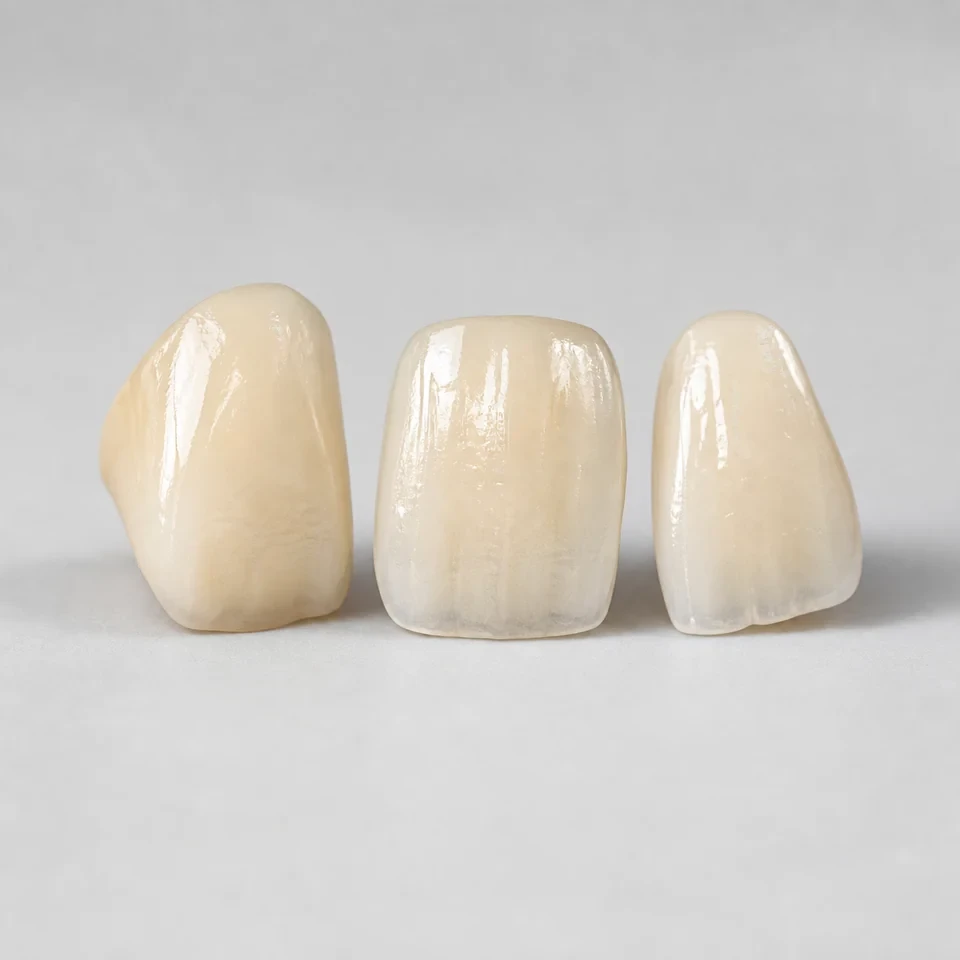
Dental Veneers
Lithium disilicate veneers produced for esthetic-zone cases, with preparation, shade and translucency reviewed before production.
View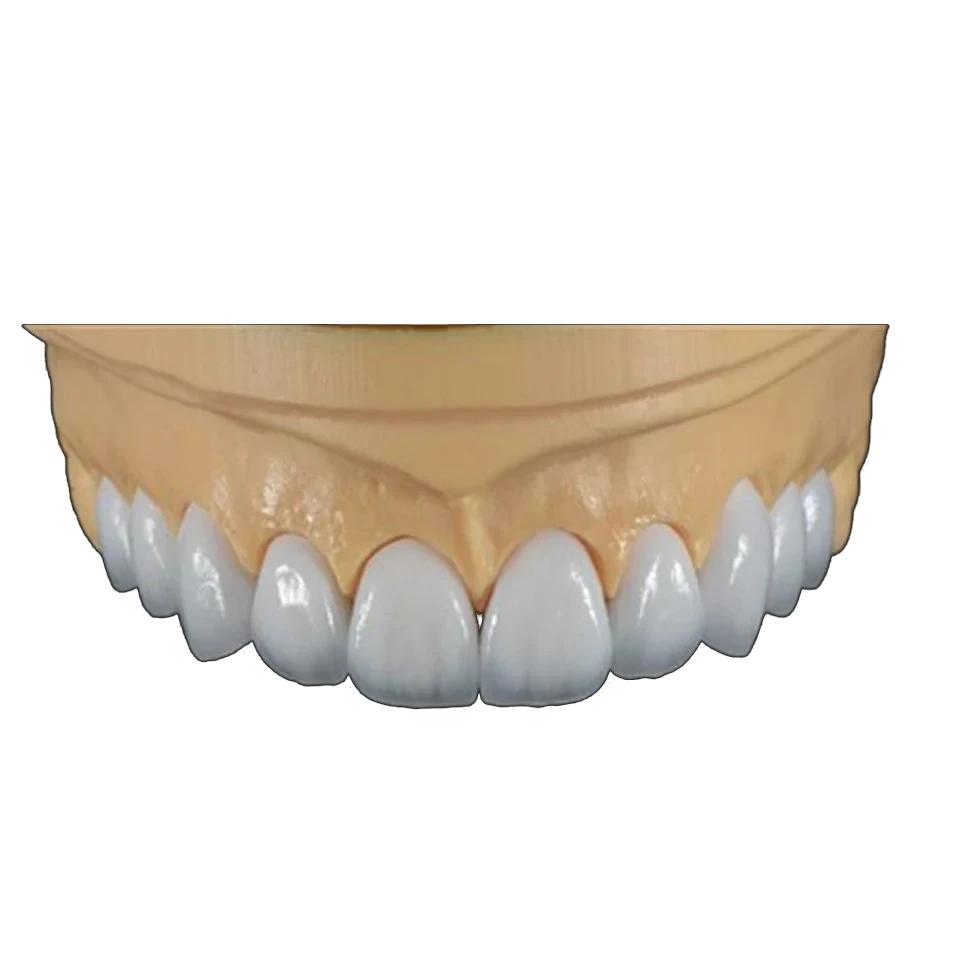
E.max Veneers
Lithium disilicate veneers produced for anterior esthetic cases, with preparation, translucency and shade reviewed before characterization.
View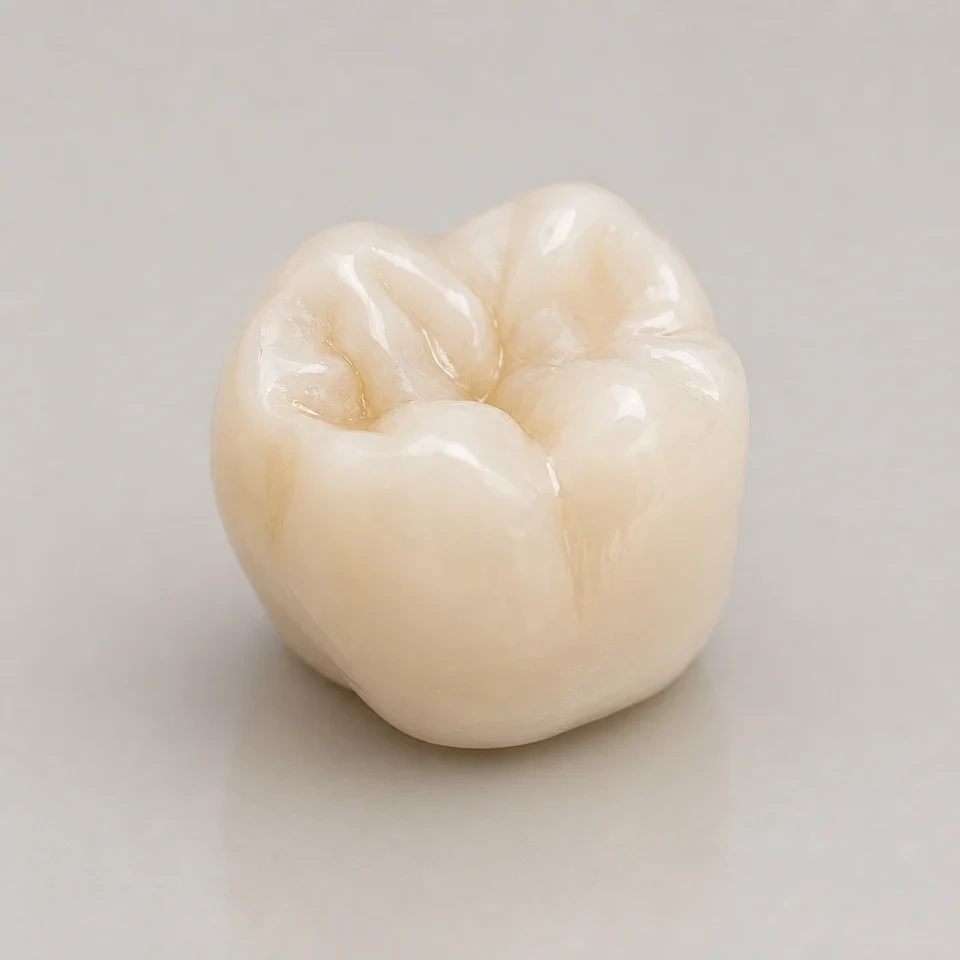
Zirconia Crowns
Full-contour and layered zirconia crowns and bridges milled from approved digital designs, with case-by-case review of margins, contacts, occlusion and material requirements.
View