Flexible Partials
Flexible partial dentures designed from records, with clasp planning, shade and fit coordinated before production.
Details at a Glance
| Restoration type | Removable — flexible partial denture |
|---|---|
| Material options |
|
| Design options |
|
| Commonly considered for |
|
| Records to supply |
|
| Quality focus |
|
| Turnaround | Removable cases are scheduled by record completeness and design confirmation. |
What Flexible Partials Are
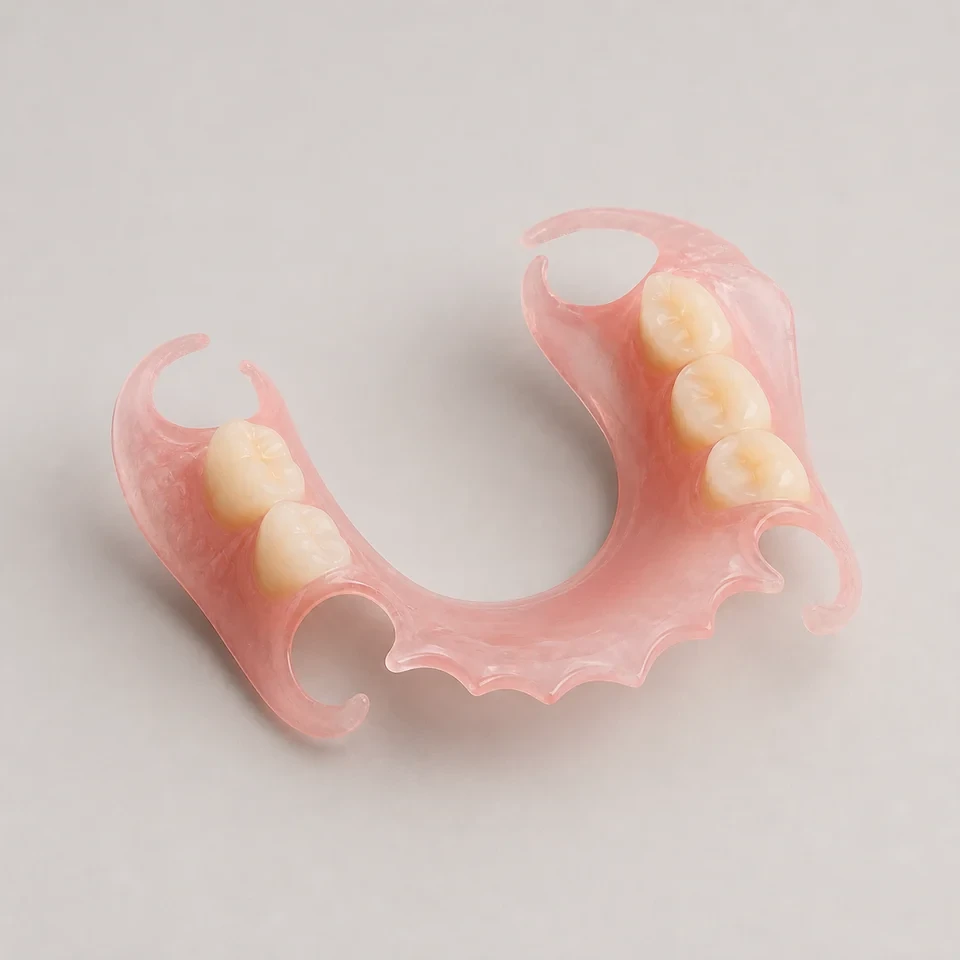
A flexible partial denture lab produces removable partials in a nylon-based thermoplastic that flexes under load and clasps teeth without a visible metal framework. KC Dental Lab designs the flexible partial from the clinician’s records so the base and clasps follow the soft-tissue contour and the edentulous spaces, replacing missing teeth while keeping the restoration light and discreet. The material is gum-colored and translucent, which helps the clasps blend with the gingiva rather than showing metal at the neck of the tooth. Because the flexible base behaves differently from a rigid framework, the design is planned around accurate survey and undercut information so the partial seats and retains as intended, and the flexible partial denture lab reviews every case on its individual survey. The flexible thermoplastic is chosen because it distributes load gently across the supporting teeth and gingiva, which many patients find more comfortable than a rigid metal frame.
Who It Suits
Flexible partials suit clinicians and laboratories managing partially edentulous patients who prefer a metal-free, lightweight restoration or who are not candidates for a rigid framework. They are appropriate for transitional or interim use, for patients concerned about metal display, and for cases where a gentle clasp is preferred over a cast arm. The workflow also helps when a patient wants a comfortable provisional while a definitive plan is decided. Common professional and workflow contexts include:
- General clinics providing discreet partials for appearance-conscious patients.
- Practices offering a transitional or interim removable option.
- Reference laboratories producing flexible partials from digital scans.
- Distributors supplying metal-free partials to regional clinics.
Indications Commonly Considered
- Partially edentulous arches with one or more missing teeth.
- Patients preferring non-metal clasping for esthetics.
- Transitional or interim partials during treatment.
- Cases where visible metal display is a concern.
- Anterior spaces where a gum-colored clasp is preferred.
- Situations needing a light, flexible alternative to a rigid frame.
Material and Design Options
The partial is built from material and design categories matched to the survey. Options include:
- Flexible thermoplastic, nylon-based partial material.
- Clasp and coverage design planned to the survey.
- Shade matching to tissue and adjacent teeth.
- Tooth selection and setup coordinated with the prescription.
What the Case Needs
The following inputs let the partial be designed to the individual arch:
- Partial impressions or scans of the arch.
- Tooth numbers to be replaced and edentulous spaces.
- Shade and mold selection for teeth and base.
- Survey and clasp preference notes.
- Opposing arch and bite registration.
- Photos or existing partial references where available.
Digital Workflow Requirements
A clear digital record supports accurate clasp and coverage planning. Expected inputs are:
- STL, PLY or OBJ files when the case uses digital records.
- Opposing arch and bite registration supplied with the scan.
- Clear undercut and tissue information for the survey.
- Path of insertion and clasp coverage guidance.
- Reference photos where the gingival shade matters.
Compatibility to Confirm
These points are confirmed so the partial is planned to the right site:
- The arch and the exact teeth to be replaced.
- The undercut and survey details for clasp planning.
- Whether the partial is interim or definitive in purpose.
- Any combination with existing restorations or frameworks.
Quality Checkpoints
- Framework and clasp fit reviewed against the model.
- Base adaptation and tissue contact checked.
- Occlusal contact and opposing relationship confirmed.
- Shade, finish and polish reviewed before dispatch.
- Prescription consistency and packaging inspected.
- Retention and insertion path verified at final check.
Turnaround Variables
Flexible partial time is shaped by record completeness and design confirmation rather than a fixed run. A case that arrives with a clear scan, defined tooth numbers, accurate survey and a chosen shade moves forward more directly, while cases needing revised clasp planning, corrected undercut information or a re-scan take longer. Repair or reline discussion, if requested, adds steps, and shipping destination is part of the window, so the realistic schedule is confirmed per case after the records are reviewed.
Common Questions
What is a flexible partial made from?
It is made from a nylon-based thermoplastic that flexes under load and clasps teeth without a rigid metal framework.
Who is a good candidate?
Patients who prefer a metal-free, light restoration, or who need a transitional partial, are common candidates when the survey supports the design.
Can the shade be matched?
Yes, the base and teeth are shaded to the tissue and adjacent teeth using the clinician’s prescription and references.
Are repairs and relines possible?
Flexible materials have specific repair and reline considerations, so any such request is discussed and confirmed before work begins.
Next Step
Send your partial type, case files, arch and tooth details, and shade references so the flexible partial denture lab can design and review your case. You can send a case, review our removable restorations program, compare options in the acrylic versus flexible partial guide, or request a price list when ready.