
Material comparison
Zirconia vs E.max Crown
Zirconia and lithium disilicate solve different problems. This comparison covers where each material is commonly considered, and what the laboratory needs from you to produce either one predictably.
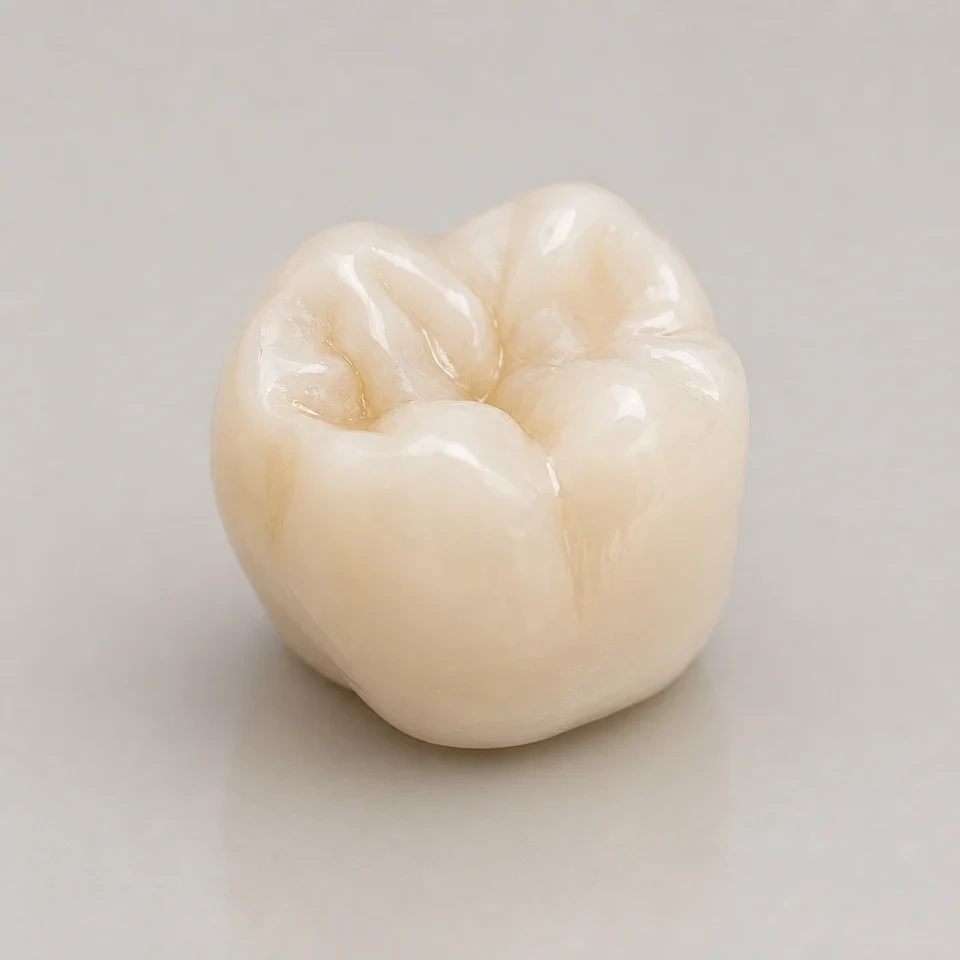
Both materials produce reliable restorations — when they are matched to the right case. The question is rarely “which is better” and usually “which fits this tooth, this position and this bite.”
Where zirconia is commonly considered
- Posterior single units and bridges where strength is a priority
- Cases with reduced interocclusal space, subject to thickness review
- Full-arch and long-span work, subject to span and connector review
Where lithium disilicate (E.max) is commonly considered
- Anterior crowns and veneers where translucency matters most
- Inlays and onlays
- Cases with adequate thickness for the material and adhesive cementation
What the laboratory needs either way
- A prescription that names the material (or asks the lab to recommend one)
- Clear margins, bite records and shade information
- Preparation shade for thin or translucent restorations
- Reference photos for esthetic cases
How we confirm the choice
Material thickness, connector dimensions and cementation approach are reviewed per case. If the prescription and the preparation do not fit the requested material, the design is clarified before production rather than forced through.
Compare the production details on the Zirconia Crowns and E.max Crowns pages, or send the case for review.