
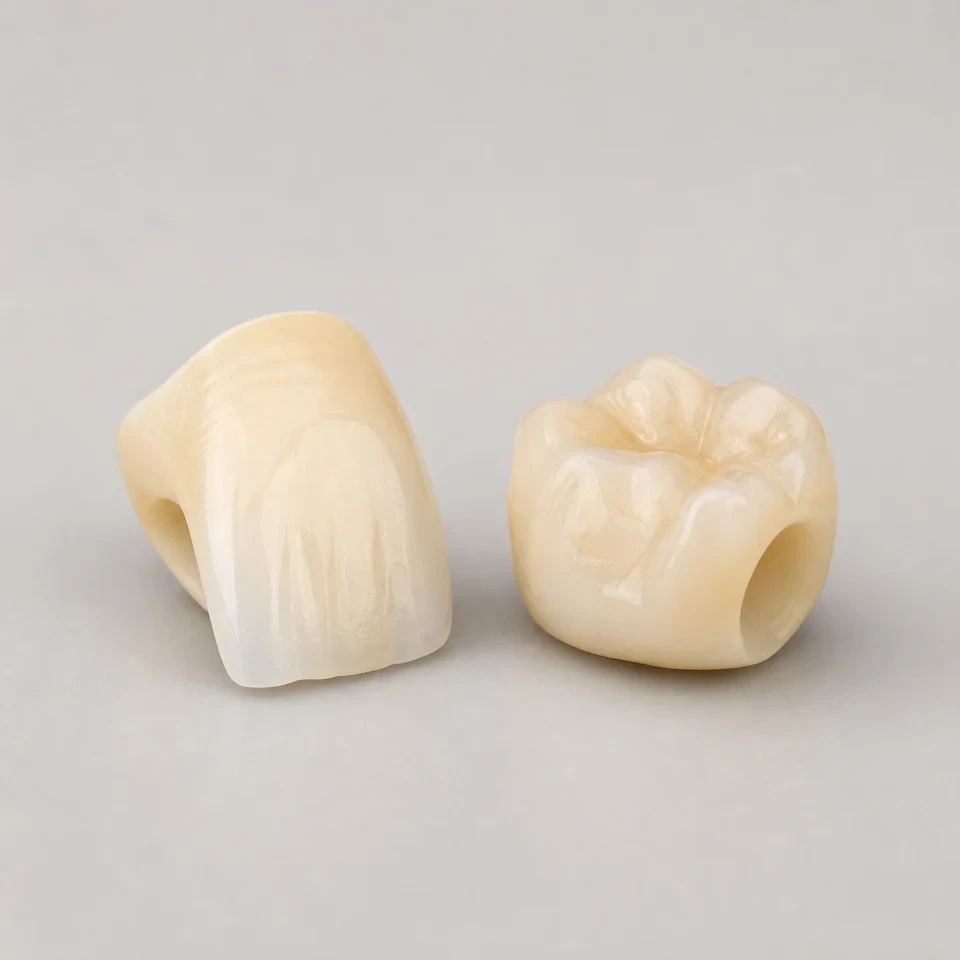
E.max Crowns
Lithium disilicate crowns, veneers and inlays produced for esthetic cases, with material selection and shade confirmed before production.
Details at a Glance
| Restoration type | Fixed restoration — monolithic or layered lithium disilicate |
|---|---|
| Material options |
|
| Design options |
|
| Commonly considered for |
|
| Records to supply |
|
| Quality focus |
|
| Turnaround | Production scheduling depends on restoration type, complexity and confirmation of all case details. |
What E.max Crowns Are
An e.max crown dental lab workflow centers on lithium disilicate, a glass-ceramic material used for anterior and premolar crowns, veneers, inlays and onlays where esthetics are the primary goal. Lithium disilicate can be produced by pressing an ingot into a refractory mold or by CAD/CAM milling a presintered block, and the chosen route is selected according to the case, the preparation and the restoration type. Because the material is relatively translucent, the underlying tooth color, the chosen cement and the surrounding dentition all influence the final shade, which is why shade communication is reviewed before production rather than assumed. The shade behavior of lithium disilicate means the laboratory reviews stump and cement information together with the final target before the restoration is started.
Who It Suits
An e.max crown dental lab service suits clinicians and laboratories focused on the esthetic zone who can provide clear preparation records, shade references and occlusal information. The material is appropriate where light transmission and surface characterization matter more than maximum load-bearing capacity, and where the treating clinician plans adhesive or bonded cementation for retention. It also suits technicians who want a pressed or milled lithium disilicate unit to finish and characterize locally.
- Dental clinics placing anterior and premolar esthetic single crowns
- Laboratories finishing lithium disilicate veneers, inlays and onlays to a prescription
- Distributors and agents serving practices that prioritize natural-looking ceramics
- DSOs and dental groups with a defined esthetic-restoration protocol
Indications Commonly Considered
- Anterior and premolar single crowns where appearance is the main concern
- Veneers and minimally invasive esthetic cases
- Inlays and onlays for conservatively prepared posterior teeth
- Implant-supported crowns when the clinical situation is appropriate
- Single units where translucency and light handling are prioritized
- Cases where bonded cementation is planned and documented
Material and Design Options
- Lithium disilicate produced by pressing for selected anatomic forms
- Lithium disilicate milled by CAD/CAM for digital workflows
- Staining and glazing for monochromatic characterization
- Cut-back and layering for added incisal and surface detail
- Translucency variants selected to match the stump and final shade target
What the Case Needs
- Tooth number and restoration type recorded on the prescription
- Shade and translucency requirement, including stump shade where relevant
- Preparation photos or scans that show the margin clearly
- Occlusion notes and opposing arch information where relevant
- Cementation plan and any bonding protocol notes
- Clinical photos and neighbouring-tooth references for esthetic cases
Digital Workflow Requirements
- STL, PLY or OBJ scan of the preparation and the opposing arch
- Clear, continuous margin capture so the seat can be designed accurately
- Bite registration or an articulated scan for occlusal relationship
- Adequate clearance notes to support the planned material thickness
- Surface texture or characterization references where requested
Compatibility to Confirm
- Cementation method, because e.max is commonly bonded rather than conventionally cemented
- Stump shade and cement shade, which affect the final translucency
- Implant connection details for implant-supported e.max crowns
- Whether a pressed or milled route is preferred for the restoration
Quality Checkpoints
- Margin fit and integrity checked against the preparation
- Proximal contact and emergence profile reviewed
- Shade and translucency matched to the supplied references
- Incisal characterization and surface finish assessed
- Internal fit, occlusion and final polish confirmed before dispatch
- Try-in and bonding guidance reviewed where requested
Turnaround Variables
Production scheduling for e.max cases depends on restoration type, complexity and confirmation of all case details rather than a fixed interval. Pressed and milled routes, the number of units, the amount of characterization requested, shade review and any clarification of preparation or occlusion all affect the timeline. The schedule is confirmed once the prescription, files and shade information are complete and reviewed, so the actual timing reflects the confirmed scope. Where pressed fabrication is chosen, ingot selection and the firing cycle add steps that are reflected in the confirmed schedule.
Common Questions
Is e.max always the right material for an anterior crown?
No. Restoration position, preparation, available thickness, occlusion, parafunction and esthetic requirements should be reviewed before material selection. Very high strength demands may favor zirconia instead.
How does the stump shade affect the final result?
Lithium disilicate is translucent, so the underlying tooth and cement shades can influence the final appearance, especially in the esthetic zone. Supplying stump and cement shade notes helps predict the outcome.
Can e.max be combined with other materials in one case?
A mixed-material plan may be discussed, but shade matching, translucency, function and the prescribing clinician’s instructions must be reviewed carefully before production.
Does e.max need bonded cementation?
Bonded cementation is commonly planned for lithium disilicate because it supports retention and esthetics, but the specific cementation method should be stated on the prescription so the restoration is designed accordingly.
Next Step
Send preparation scans, stump shade, final shade and clinical photos for an e.max case review before confirming the workflow. You can also compare options in the zirconia vs e.max guide or send a test case to evaluate the result.
Related products
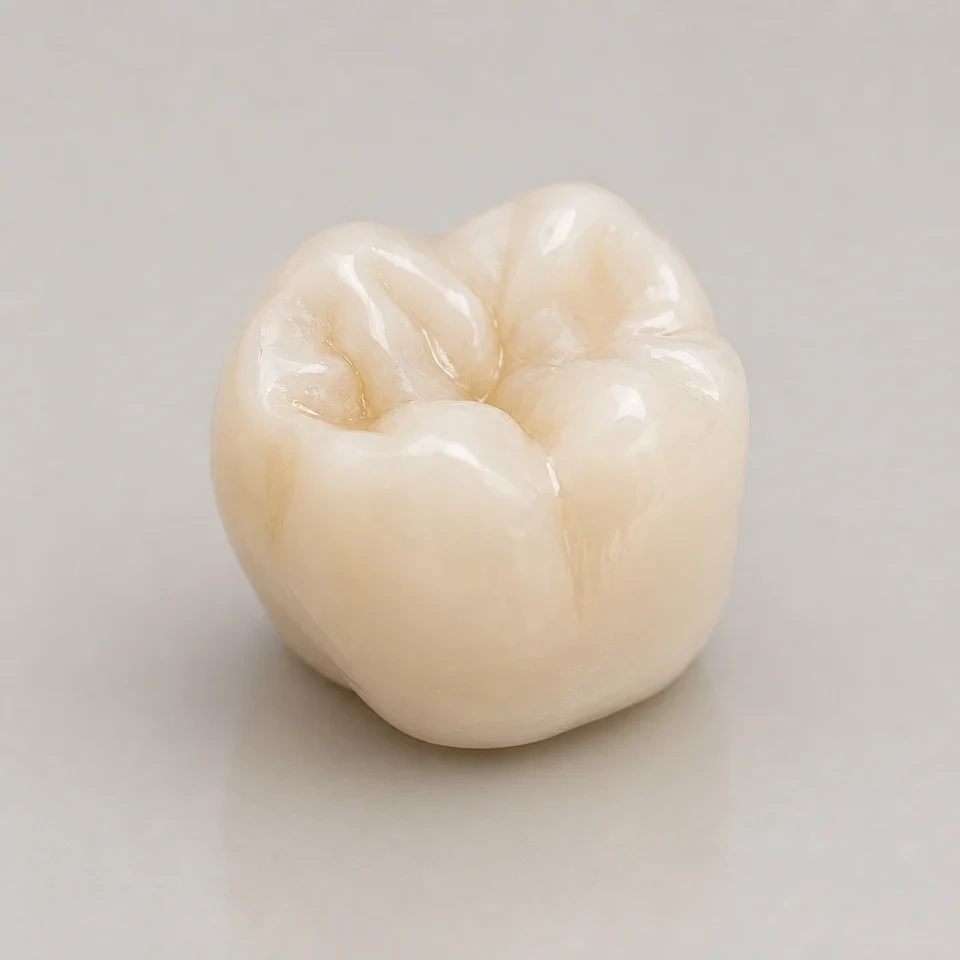
Zirconia Crowns
Full-contour and layered zirconia crowns and bridges milled from approved digital designs, with case-by-case review of margins, contacts, occlusion and material requirements.
View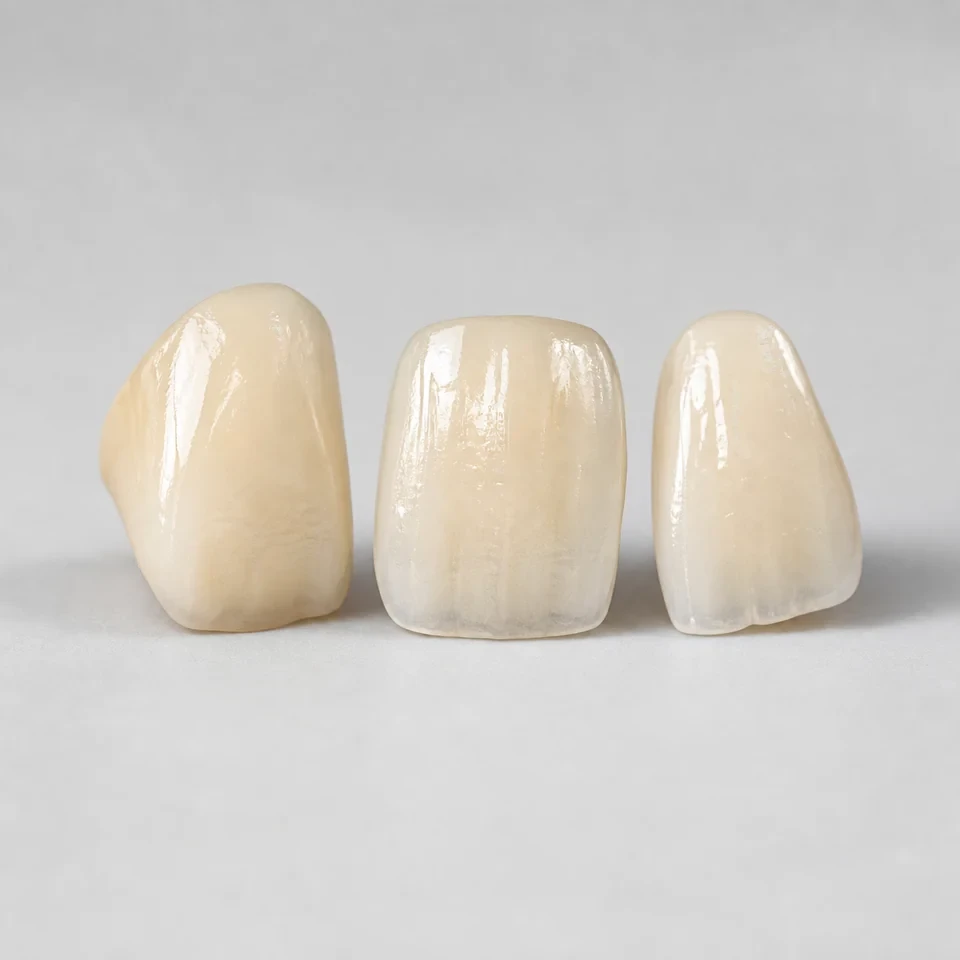
Dental Veneers
Lithium disilicate veneers produced for esthetic-zone cases, with preparation, shade and translucency reviewed before production.
View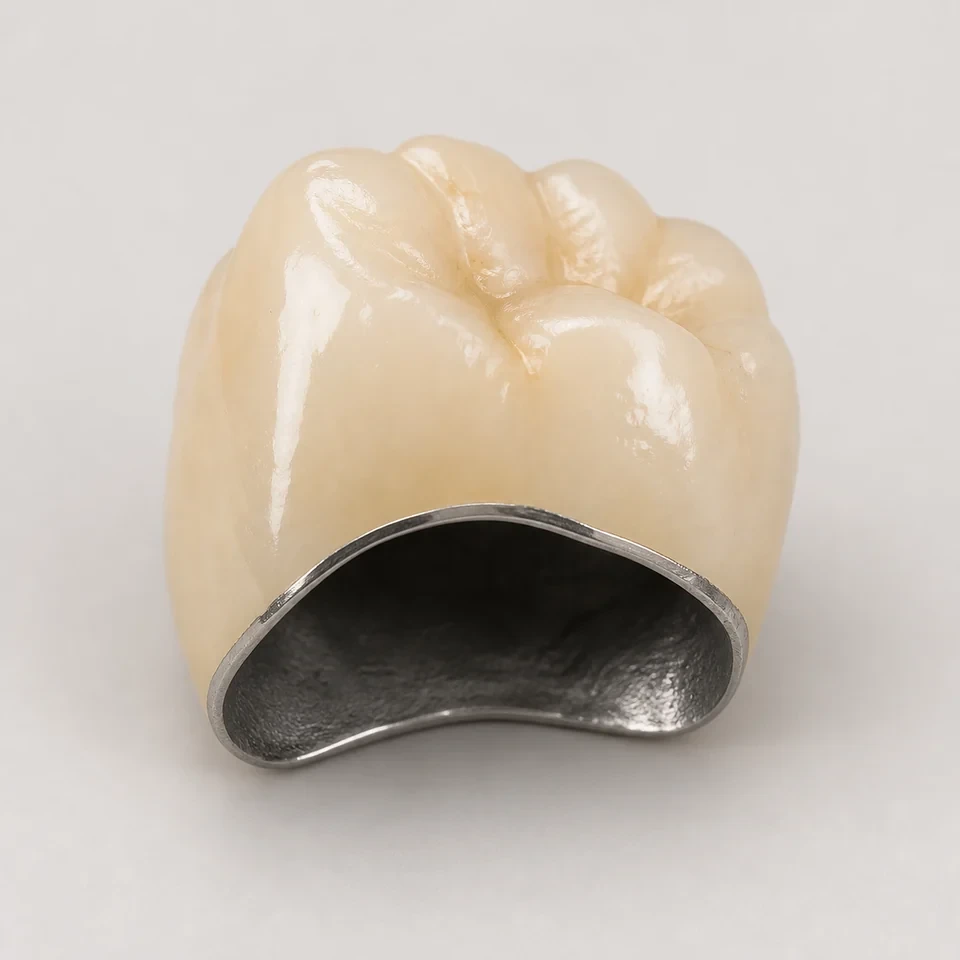
PFM Crowns
Porcelain fused to metal restorations combining a metal coping or framework with a compatible ceramic system, coordinated through framework fabrication, layering and firing.
View