
Production and quality
Shade Matching and Characterization for Crowns and Veneers
Shade problems usually start with the records, not the ceramic. This guide covers the photographs, tab references and instructions that make a match repeatable.
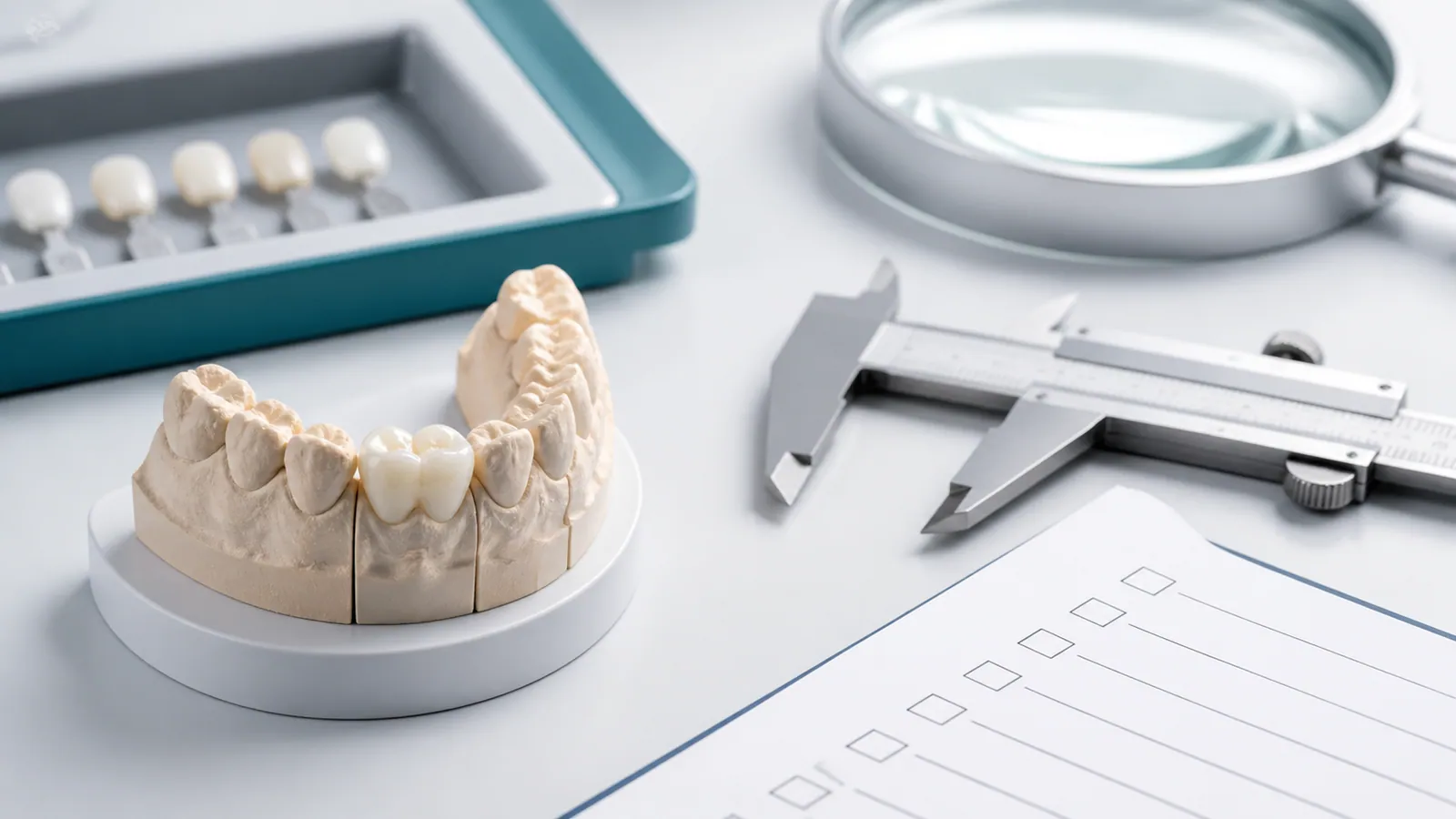
Shade matching is the process of recording what a restoration should look like so the lab can reproduce it, and most shade problems begin with the records rather than with the ceramic. A crown characterization that reads correctly in the mouth depends on a photograph, a tab reference and a stump shade that together describe the target, not on a single word like “A2”. This guide sets out a repeatable workflow for crowns and the material options behind them, and the instructions that help a lab match rather than guess. The same discipline applies to both E.max crowns and zirconia crowns, because both fail for the same reason when the records are weak.
Why verbal shade descriptions fail
A shade name like “A2” is a point on a guide, not a description of a living tooth. Real teeth vary in value, chroma and translucency across a single surface, and a label cannot carry that variation. Worse, the same label read under different lights means different things, so a verbal note invites a mismatch that only shows up at seating. A photograph and a tab together capture what the word leaves out, which is why records beat memory every time. The cost of a poor match is a remake; the cost of a good record is a few minutes at the chair.
Photographing shade correctly
Use neutral, diffused lighting and a shade tab held next to the target tooth in the same plane, with the camera white balance set rather than left on auto. Avoid mixed office lighting, which tints everything and makes the lab correct toward the wrong color. A second photo of the full smile gives context for value and arrangement, and helps the lab place the tooth in the face rather than in isolation. The reference photo is the single most useful record a clinic can send, and repeating it at each appointment keeps the target from drifting between visits.
Using a shade tab
The tab is the fixed reference the lab calibrates against, so it should be the same guide system the lab uses. Note the tab code and, if the tooth sits between codes, say which direction it leans, because a midpoint is a real instruction and not a vague one. A tab alone still lacks translucency and surface context, which is why it pairs with the photo rather than replacing it. When a case spans several teeth, marking the reference tooth on the tab photo prevents the lab from matching the wrong unit and building the arch around a poor anchor.
Stump shade and its effect
The prepared tooth or the post underneath contributes to the final color, especially in thin dental veneers and translucent ceramics where the substrate shows through. Recording the stump shade tells the lab how much masking the restoration needs, and skipping it is a common cause of a crown that looks too dark or too light against the neighbor. For a veneer, the stump shade is often the deciding factor in whether the result reads natural, because there is little material thickness to hide what sits behind it. The lab can then build opacity exactly where the tooth demands it.
Translucency and incisal character
Value and chroma describe color, but translucency describes how light passes through, and that is what makes a crown look alive rather than painted. Note where the tooth is translucent, usually at the incisal third, and where it is opaque, usually at the cervical third. Incisal characterization such as halos or mamelon effects should be requested explicitly if they matter to the case, because a generic crown will not invent them. A crown characterization that includes these details is far easier to repeat than one left to chance, and it gives the lab a written target rather than an implied one.
Single-unit versus full-arch matching
A single crown only has to match its neighbors, while a full arch must stay consistent across many units and still relate to the face. For a multi-unit case, pick one reference tooth and document it, then let the lab graduate the others from that anchor so the set stays coherent. This prevents the common failure where each unit is correct alone but the arch looks patchy under smile light. A clear reference and a sequence plan keep the work orderly from first molar to central incisor, and they make a later add-on unit match the original rather than restart the conversation.
What to write on the prescription
For reliable shade matching, state the tab code, the stump shade, the reference tooth for multi-unit cases, and any characterization you expect such as incisal translucency or cervical staining. Mention the lighting condition of the photo so the lab can weight it correctly against the tab. A short, specific note beats a long vague one, and it gives the clinician a record to check against the seated result. These few lines are what turn a shade request into a reproducible instruction that survives a change of hands between submission and production.
Reviewing the result chairside
When the restoration returns, check it under the same lighting you used for the reference photo, not under operatory light that may read differently and flatter or punish the result. Look at value first, then chroma, then translucency, because the eye catches value discrepancies fastest and they are the hardest to excuse. If something is off, a specific note about which axis is wrong helps the lab adjust the next unit precisely instead of repainting the whole crown. Requesting the lab’s inspection photo alongside the physical crown makes the comparison objective rather than a matter of memory.
Next step
Build the habit of sending a reference photo, a tab code and a stump shade with every esthetic case, and send a case when you are ready to put the workflow to work on a real unit. For how the lab keeps color steady through production, see our guide on zirconia sintering and shade control, which covers blank selection and shading steps. Consistent records at submission are what make a match repeatable from the first crown to the last, and they are the part a clinic controls most directly.