
Materials
Acrylic vs Flexible Partial Denture
A practical comparison to help you choose between acrylic and flexible partial dentures.
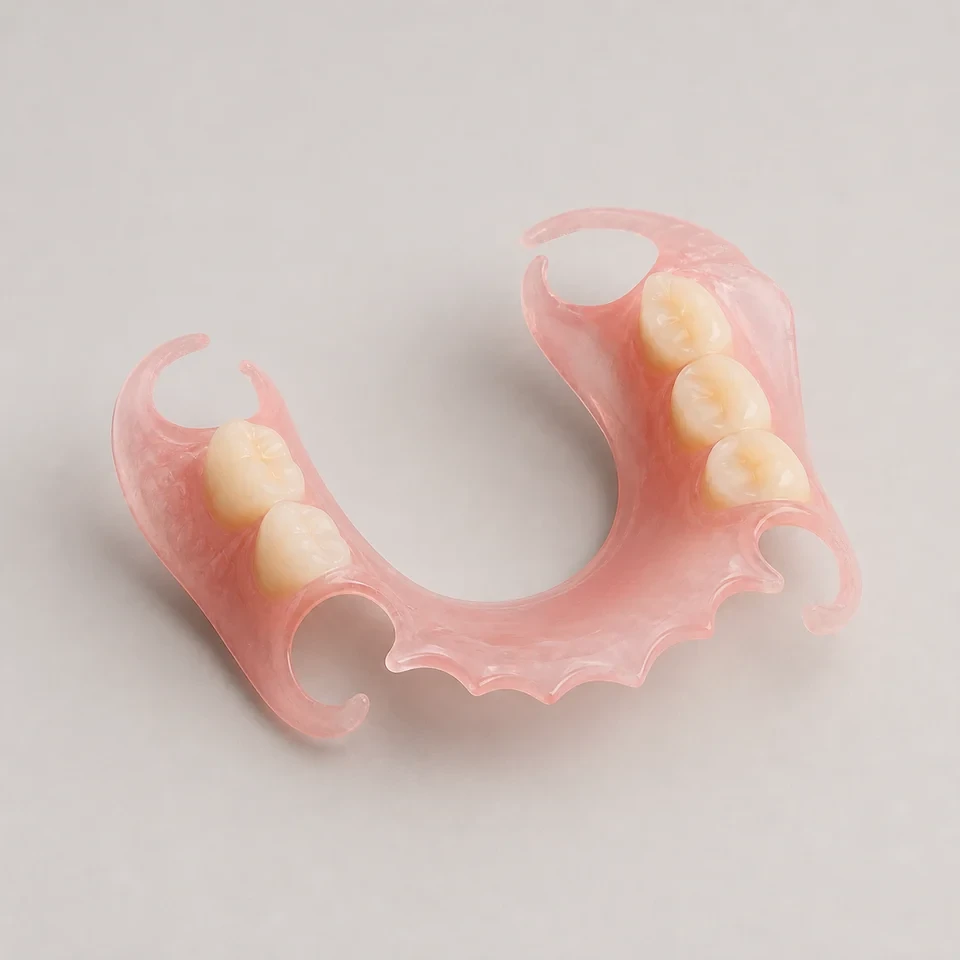
What each option is
An acrylic partial denture uses an acrylic base with conventional clasping, often metal-reinforced or combined with a cobalt chrome framework. A flexible partial uses a thermoplastic material that clasps without visible metal.
Esthetics
Flexible partials are often chosen when metal clasp display is a concern. Acrylic partials can also be finished to match tissue, but clasping is more visible unless a metal framework is used.
Strength and repair
Acrylic partials are generally easier to repair, reline and adjust. Flexible materials have specific repair and reline considerations that should be planned for at the design stage.
Fit and feel
Flexible partials are lighter and adapt closely, which many patients prefer. Acrylic and framework partials offer rigid support, which may suit longer spans or strength-critical cases.
Records needed
Both require accurate impressions or scans, opposing arch and bite registration, plus a clear survey and clasp preference. Digital records are commonly accepted.
How to decide
Consider span length, esthetic priority, expected adjustment and repair needs, and whether the patient has previously worn a similar appliance. When in doubt, discuss the specific case before sending it.