
Implant restorations
Implant-Retained Overdentures: A Lab Guide to Locator and Ball Attachments
An implant-retained overdenture stabilises a removable prosthesis on two or more implants. This guide covers Locator and ball attachments, planning inputs and what the lab needs to fabricate accurately.
Published October 29, 2026
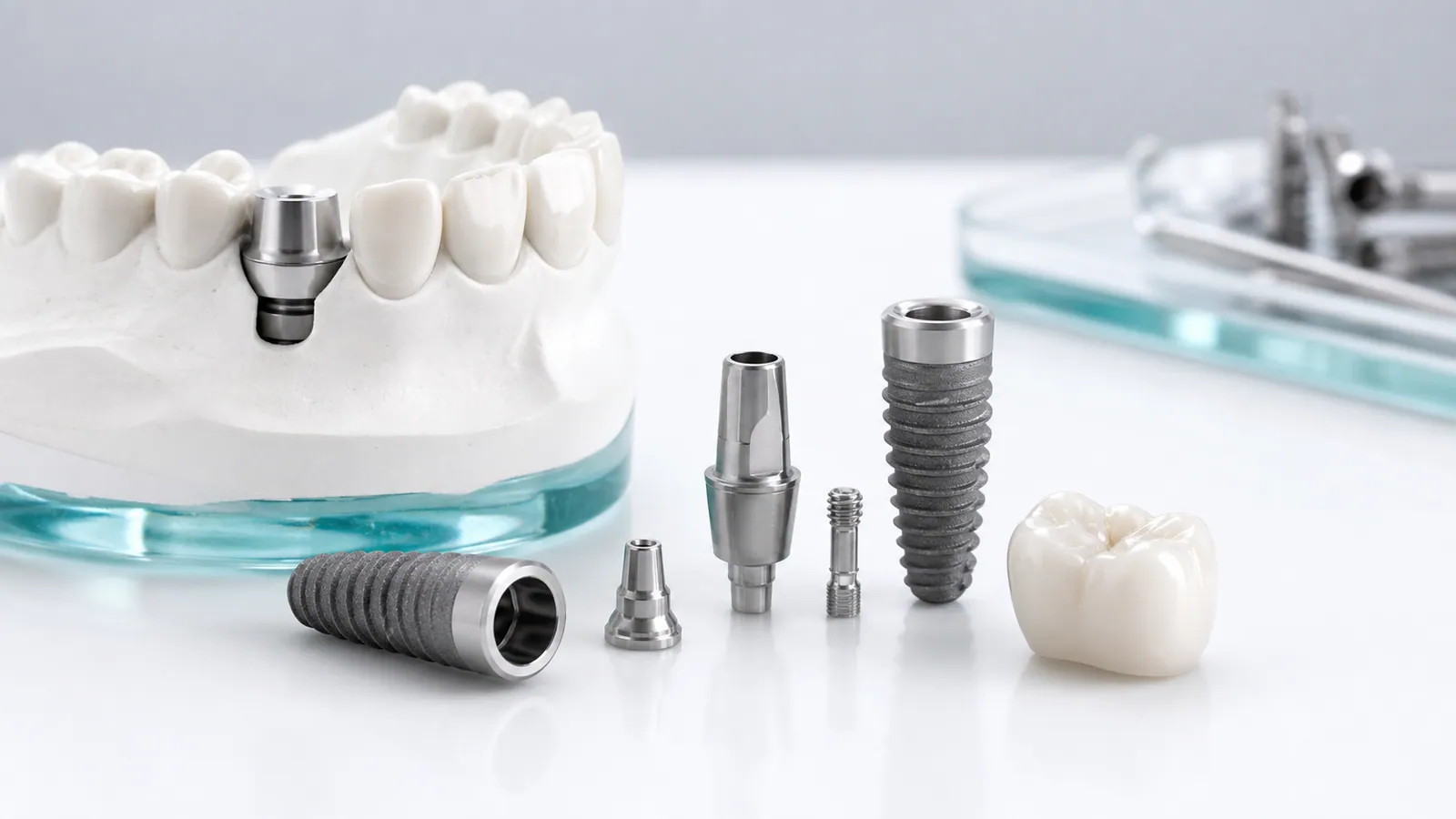
An implant-retained overdenture is a removable prosthesis that clips onto two or more dental implants through retentive attachments, rather than relying on soft-tissue support and adhesive alone. For many edentulous patients it is the step between a conventional denture and a fully fixed reconstruction. This guide explains how the two common attachment systems — Locator and ball — work at the laboratory bench, what changes between them, and what the lab needs from you to fabricate accurately.
1. Where an overdenture fits
A conventional complete denture is retained by suction and muscular control. Adding two implants in the anterior mandible gives the prosthesis a stable anchor, which typically improves retention, speech and chewing confidence. The prosthesis is still removed for cleaning, but it no longer moves during function.
This approach is most common in the mandibular arch, where a conventional denture is hardest to stabilise. The maxillary arch usually needs more implants for the same stability because of bone quality and the larger palate.
2. Locator attachments
A Locator system uses a low-profile male housing on the implant and a corresponding female insert embedded in the denture base. The inserts are available in different retention strengths, and they can be replaced in the chair without relining the prosthesis.
Locator attachments tolerate a degree of implant angulation between the two fixtures, which matters when implants cannot be placed perfectly parallel. They sit close to the tissue, so they need relatively little vertical space inside the denture.
3. Ball attachments
A ball attachment uses a spherical male on the implant and a rubber or metal housing on the denture. The design is straightforward and has been used for decades. It allows some rotational freedom, which can feel forgiving for the patient.
Ball attachments generally require a little more vertical clearance than Locators and are less forgiving of implant divergence. They suit cases where implants are well aligned and vertical space is adequate.
4. Choosing between them
The decision is case-specific. Considerations include:
- Implant angulation — Locators absorb more divergence
- Available vertical dimension — balls need more clearance
- Hygiene access — both need daily cleaning around the attachments
- Future maintenance — Locator inserts are designed to be swapped; ball housings may need more involved servicing
Neither system removes the need for a stable ridge, a correct occlusal scheme and a prosthesis that is properly relieved around the attachments.
5. What the lab needs from you
To fabricate or duplicate an overdenture on implants, send:
- Implant positions and the attachment system specified per implant
- The opposing arch and a record of how the jaws relate (bite registration)
- Vertical dimension and centric relation if the case involves a new bite
- Shade and mould preference for the teeth
- Any existing prosthesis to copy shape and phonetics where appropriate
For a digital workflow, an intraoral scan with scan bodies in place, plus the corresponding scan body library, lets the lab design the housing position virtually. See how to send STL files to a dental lab.
6. Clinical workflow at a glance
- Implants placed and allowed to integrate
- Healing abutments or Locators/balls connected at second stage
- Final impression or digital scan captured with the attachment components
- Lab fabricates the prosthesis with the female housings
- Clinic seats the prosthesis and verifies retention and occlusion
For the wider outsourcing picture, see implant restorations from a China dental lab and what to hand off for an implant case.
Next step
If you are planning an overdenture case, send a test case with the records above, or request a price list and compare the workflow against your current laboratory.